Shimmering Literacies – My Blog

The simple art of listening to – and caring about – what students say

Time for a bit of rant today.

I was at a local conference on teaching recently, doing my dog-and-pony show about how students engage with digital media outside the classroom and the implications for how we approach teaching reading and writing (I’m never certain, by the way, whether I’m the dog or the pony in this particular show.) This was for a group of faculty and graduate students across a variety of disciplines. People were pleasant and polite and there were some productive questions. But, during and after the session, I was struck, as I often am by the surprise among some faculty at the idea of having ongoing conversations with students about what students know. Then I did a guest lecture at another campus and there were similar questions, and a discussion thread on a professional online list I follow went the same direction. As I said, what surprises me is that the idea of starting our teaching by talking with students about what they know still strikes many people as radical. What disheartens me is the attitude of far too many faculty and instructors that what students know is irrelevant or uninteresting.

There’s always a lot of talk in my field about having a “student-centered classroom” and often discussion about whether we should do so. But, from what I see, this is a non-issue because too often I see attitudes that are barely “student-tolerant,” let alone “student-centered.” There is so often such a lack of respect, at least at the college level, toward students. “They don’t want to do the work,” “They can’t read and write,” “I won’t read their course evaluations as long as I have a Ph.D. and they don’t.” “What they know outside of class is what I’m trying to teach against.” Sigh. No one students come into our courses wary, beaten down, and wondering about the relevance of anything we are trying to teach them. As a writing program administrator, one of my hard and fast rules has been no mocking of students and student writing – even among ourselves. It is, of course, immature, unethical, and disrespectful to do so. It is also exactly what students fear we are doing with their writing. If we don’t take their work seriously, why should they? Do we want our writing mocked by colleagues, editors, reviewers? I can’t enforce this rule, but I do try to make the point that teaching is an art of patience and compassion as much as of the transfer of knowledge.

I’m no saint. I get frustrated with students who are resistant, or seem unwilling to do the work, or dismissive of what I’m trying to teach them. And sometimes I think they are truly resistant and we won’t reach them. But, at the risk of going a bit Yoda on all this, I think underneath so much of what is performed as resistance and boredom is fear and anger – fear of not understanding or of being assessed and found failing once again, and anger at feeling belittled, humiliated, and treated condescendingly. When I find my frustration rising, I try to remind myself that you never, never know when you might get through to the resistant student. One cutting remark now might make me feel better, but loses that student in my class forever. But continued respect may allow that student to receive another comment later in the semester in a way that is productive and, once is a while, transformative. I was often a resistant student as an undergraduate. I can see myself in the student sitting in the back of the classroom, slouched in a chair, daring someone to try to teach him. The teachers I responded to were the ones who communicated respect for student ideas and created meaningful assignments. We could all tell the difference. So much recent research on student writing shows that students respond best – and by best I mean productively able to incorporate instructor comments into their writing – to instructor comments when the comments demonstrate a clear respect for the intelligence and ideas of the student. This doesn’t mean we don’t offer critique and suggestions, but just that we see students as intelligent people with ideas worth communicating, as people who want to be heard and respected.

People often ask me why I am interested in research about popular culture and student literacy practices. There are lots of reasons (I mean, I like watching movies too). But one central reason is that I am continually interested by the literacy practices students engage in outside of the classroom. Unless we understand how they read and write in the majority of their time and how they have learned about rhetorical concepts such as audience or genre or authorship, we can’t teach writing and reading effectively. And, if we want to understand the texts they engage with most often outside the classroom, we need to look at popular culture, whether it is television, movies, social networking, music, or video games. I am continually convinced and inspired by the basic ideas of pedagogy from Dewey and Freire and Murray – we have to start with what students know and help them find was to engage critically with their own knowledge. My guess is that, for anyone reading this entry, I will be preaching to the converted, so maybe it’s a waste of time. But a rant sometimes just needs to be ranted.

Again, I’m no saint. And, I know many, many excellent teachers who treat their students with respect and learn a great deal by engaging students about what they learn outside the classroom and then help students learn things that will make them more creative and critical readers and writers in our classes and at home. For every comment I hear at a conference or online that makes me want to climb the walls, there are far more that are supportive and respectful toward students. And, just as with students, I try to maintain a respect for my colleagues and continue to try to convince them that we need to listen to our students as the first act of teaching.

End of rant.

New Media Literacies and Participatory Popular Culture Across Borders – Getting Closer!

The page proofs are in and the book is listed on the publisher’s website, so that must mean it’s going to happen. While the book won’t be out until later this spring, here’s a look at the cover. I have to say, I’m rather partial to the purple. This has been a fascinating book to work on, and I’ve learned so much from the contributors and their chapters and, as always, from my friend and collaborator, Amy Zenger. I hope this book will help start conversations in a many different directions. I also like the fact that other books, like the new one Transnational Literate Lives in Digital Times (from Patrick Berry, Gail Hawisher, and Cindy Selfe) are coming at similar issues from different perspectives and making the conversation richer and more thought provoking. Anyway, here is the cover, and thanks to all the wonderful people at Routledge. More to come on this soon as well.

Ideology, surveillance, and the software in our classrooms – Part II

As Ben Wetherbee’s pointed out in his comments on my last post and on his latest blog post, surveillance is happening in any number of sites in the university, from assessment sites to course management software. It’s not caused by digital media, of course, it’s just that digital technologies have made the transfer and storage of such material so easy – and so seemingly invisible. As Manovich said in the Language of New Media, once you turn information into 1’s and 0’s you can potentially turn it into any kind of text, and now you can send it and store it just about anywhere at a moment’s notice. What’s more, the sending and storing may be hard for an individual to track or comprehend.

If you think about gathering student papers for assessment, in the days when it had to be done through hard copies, a student would have to know that she turned the paper in, or at least that she didn’t get it back, and somewhere there would have to be a physical space that would indicate the enormity of the undertaking – and just have vast the university’s reach is. Now, however, a paper uploaded to a site is just another in a potentially unending set of copies from the student’s original file, and she may never miss that it’s gone – or was copied or never came back. And all the university needs is a few hard drives that could fit in a desk drawer to keep all the material for tens of thousands of students. So the psychological and emotional result of surveillance is hidden more carefully and people shrug and figure it’s not worth worrying about. It’s hard not to get all Foucauldian here when the visibility of the panopticon has been further clouded as its reach increases. More to come on this in terms of why the “university” loves Blackboard even while individual faculty, students, and even administrators don’t.

Ideology, surveillance, and the software in our classrooms

I’ve agreed to write a chapter for a very exciting new collection being edited by Robin Goodfellow and Mary Lea, titled Literacy in the Digital University (Robin’s blog on the same subject is here). I’m grateful for the opportunity to be part of this project. My chapter is going to explore how “course management software” is shaping our pedagogy – in and out of the classroom – in ways we both understand and ways that may be more subtle. More to the point, though, is that I think the construction and use of this software (Blackboard and the like) is often antithetical to what we regard as good writing pedagogy and the effective uses of digital media.

So here’s where I’m going with this right now. Course management software, such as Blackboard, is purchased by universities and often required of faculty and students for everything from distribution of course materials to posting of grades. This software is promoted by university administrations as a set of effective pedagogical tools for use both in and out of the classroom. Yet such software is often hierarchical, rigid, and prescriptive – the antithesis of the kinds of participatory environment most conducive to creative thinking by students and faculty. It is imposed on teachers and students from the top down, difficult to modify or customize, and makes assumptions about teaching and learning that, again, tend to be rigid and hierarchical.

I see the adoption and promotion of such software  as driven by material and ideological imperatives of efficiency, control, and surveillance that are increasingly central to way the institution of the university works in contemporary culture. Course management software is promoted by university administrations as an efficient and centralized method of “managing” university courses. Faculty response to the use of such software is often to complain or shrug, and acquiesce to the demands of the institution. Yet in doing so we are complicit in reproducing institutional and cultural ideologies that are as hierarchical, rigid, and prescriptive as the software. In this way dominant ideological conceptions of knowledge and literacy – tied to notions of efficiency – find their way into writing classrooms even as we may imagine a pedagogy that will encourage students to resist such conceptions.

So in the chapter I hope, at least in part, to argue that university-imposed course management software works to reinscribe particular conceptions of epistemology and pedagogy that, as a field, we have criticized in other settings. I think it is important that we think critically and act more explicitly to resist the implementation and uses of these forms of digital media. We much also teach students to approach the use of these technologies from a more critical perspective.

But all is not grim. I refuse to give up without a fight, an alternative. So I also want to talk about how alternatives to designing digital environments for writing pedagogy that allow students a range of ways to participate in literacy practices in ways that are flexible, critical, and creative. But I’ll save more of that for the next post (which won’t be so long in happening, I promise. January was just crazy on many levels.) More soon.

Genre, Interfaces, and Ways We Teach Digital Writing

I was having coffee the other day with my friend and colleague Ryan Trauman and we got to talking about how we approach teaching people to compose texts using digital media. Trauman is both brilliant theoretically and proficient with technology in ways that I can’t touch. So, when he talks, I listen.

What was interesting – to me anyway – about our conversation was how it revealed our two very different ways of coming at this question. Trauman starts with a conceptual discussion of how software is constructed. He talks with people, on a conceptual level, about ideas such as “layers” and how they show up in different software. His belief is that, if people understand the underlying conceptual frameworks of the software, they can move from one program to another and, eventually, find a way to use any software to create the texts they want to create. This is particularly important for people who are inexperienced with and/or intimidated by digital media technologies. So he begins with the theory and logic underlying the media and helps people understand the tools they have at hand. (And I hope I’m portraying his approach accurately.)

I would approach the same group of people in a different way. I begin by talking about multimodal genres with which people are already familiar – television, film, newspapers, webpages, and so on. We talk about the characteristics of those genres and how they work to communicate ideas and engage audiences. So, for example, we might begin by talking about the nature of the “shot” in film and how shots are edited together to create scenes or narratives, or how images can lead a person through a web page. My goal is to help them to articulate the kinds of texts they want to create, and the genre characteristics they will use when composing. My thinking is that, if they have a general idea of what they want we can then work through – and play with – the software as a way to make it happen.

Neither of our approaches is necessarily better than the other. (And they’re not mutually exclusive or the only ways to approach the teaching of digital writing, of course.) The conversation has had me thinking about the effect of our approaches on our students. Trauman helps people feel comfortable through the machine, and by having a good sense of the tools at hand allows them to work in ways that no doubt help them use the interfaces in more embodied and internalized ways. I can imagine that, as a student of Trauman’s, I’d be able to start using the software in less self-conscious way that would help me focus on the ideas I would trying to communicate – much as I do when I type. That’s a great result to have from teaching.

My approach, by starting with familiar texts and moving from those to rooting around in the software for ways to make genre-connected moves, I hope gives students a particular awareness of the rhetorical characteristics of genre they’re working with as well as an awareness of the deep knowledge of previous texts and genres they can bring to their composing. In this way it’s similar to the ways in which, as we read, and then write with print we begin to draw on the craft and rhetoric of what we’ve read to create our own texts. As the novelist Caryl Phillips has said, “All writers read for plunder.” In my approach, I don’t think I address a familiarity with the tools, and the anxiety about the uses of the software as well as Trauman does, and in his he may not help students connect to the genres they know well as explicitly as I do.

The point here for me, though, is not a critique or endorsement of either or our approaches, for I can see merit in both. What interests me is how we came to those approaches and the effect this will have on our students. My guess is that, like me, Trauman’s approach reflects his own patterns of work and comfort. I know that, even as I read a lot about pedagogy and teaching writing, I tend to gravitate toward the concepts and approaches that fit my ways of working and learning. It’s not that I may not see value in other ways of teaching and try to bring those to the students I work with that I think might benefit from those methods. But, truth is, I what and how I teach is inevitably flavored by my experiences, values, ideologies, and so that students who have me in the classroom are presented with ways of approaching writing – whether in digital or print – that is similar in flavor. Because I find genres and genre theory fascinating, and tend to think through writing and rhetoric often through the genres I know or the texts I’m trying to draw from, I bring that to my teaching. This is inevitably effective for some students and less so for others.

We all tend to fall back on our knowledge and our comfortable way of working and then reach out to others through the epistemologies and pedagogies that make us comfortable. In Daniel Kahneman’s book Thinking Fast and Slow he details the many and continuing instances when we allow ourselves to act in ways we perceive as “right” or “better” but in which we may be ignoring alternatives or the problems with our own approaches. So the conversation with Trauman has given me both another way to teach digital writing, as well as a reminder to be more rigorous in thinking about what is implied in my teaching and how I might find other ways to think about the classroom, even if they are harder and less comfortable for me at the beginning. No Earth-shaking conclusion here, I realize, but sometimes being reminded of what I need to know is enough.

Dancing with Don – Reflections on an 8-year-old Piece of Writing

Back in the winter of 2003-04, back before Barack Obama had been elected to the Senate or YouTube or Facebook had been launched – and when I was still an assistant professor -, I wrote an essay about Don Murray and his scholarship about the teaching of writing.

That essay was published earlier this month.

When you wait almost eight years for an essay to be published, it’s an intriguing exercise in perspective and self-reflection. But before I get into that, I want to provide a brief background to the essay and it’s long hibernation before publication.

I wrote the essay – titled “Dancing with Don: Or, Waltzing with ‘Expressivism'” –  in response to a call for a special issue of the journal Enculturation. The special issue was to focus on the concept of “neo-expressivism” – a term I don’t particularly like (and one that, for my non-US readers, reflects a rather odd, parochial turf war in the field of rhetoric and composition). But I did see the focus of the issue as offering me the chance to reflect on the evolution of my intellectual relationship with Don Murray’s work, as well as my argument that he has not only been misread over the years, but in fact has largely gone unread and, consequently, been misrepresented by others citing his work. I also saw the piece as an opportunity to pay my respect to Don who, while not a close friend, had been a kind mentor to me and to others.

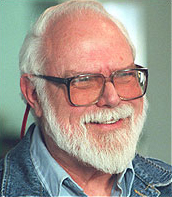
Donald Murray

So I wrote the piece, sent it to friends from my UNH days for comments, sent it to Don for his comments – which were generous and incisive – and sent it off to the editor of the special issue, where I was told it would be published by the next autumn. A long time ago I worked in daily journalism and was spoiled me in terms of how quickly I expected turnaround in terms of publishing. Still, I have learned to work within the pace of academic publishing and do not get bothered in the least by the one- or two- or even three-year wait to get something published. But I never imagined this length of time.

In the eight years that passed between the writing of the essay and its publication, a lot happened in my life. I had three books published, ended up a full professor, spent a term as first-year comp director, and watched my sons graduate from high school year.

Also, Don Murray died. In terms of this essay, that last fact is certainly the saddest. I had hoped it would come out before his death in winter 2006, not so much because it mattered whether he knew that the piece was published, but because I wanted the essay to be read as a conversation with a living scholar and not as a memorial. Now nobody else was going to get a chance to talk with him except through his writing.

Things moved on. The publication date got posted each year, and then that date passed. The special issue concept passed through another editor before falling apart completely. But at least the folks at Enculturation finally decided to just publish it on its own. It’s sort of out of place in terms of subject matter and tone as a stand-alone article in that journal and I wonder if anyone will ever read it. But, if they do, maybe it will be a different audience than I expected to reach.  I am grateful that it didn’t disappear completely and that they saw fit to publish it at all.

When the editors contacted me and said they were going to publish the essay, they gave me the option of revising and updating it. I read it over again and decided that, with the exception of an explanatory footnote about when it was written, not to change it. I like the passion of it from that time, and decided that the way I framed the argument when Don was still alive is the way I wanted to leave it.

Even so, the publication of this piece has encouraged me to stop and look at what I wrote eight years ago and notice a few things about the distance between the writer I was then and the one I am now. First of all, I was a little surprised to see that there wasn’t more that I wanted to revise. Essentially I think I was still right about my appraisal of Don’s work and that he had often been misrepresented because he had not actually been read in any depth by most rhet/comp scholars. And I think I was right in that his most radical stance, of making student writing and student experience the core of a writing course is an attempt at making teaching truly “student-centered” in a way that most writing teachers are not comfortable taking on. I think this vision of where knowledge is generated is substantially more like the work of Freire than most people realize. But, rather than repeat the whole argument here I should just let people read it.

What I also find intriguing in the in the essay though, is my writing voice. There is a tentativeness about it that reflects where I felt I was as an assistant professor without many publications. Were I writing today about writing from experience, about using the “personal” (whatever that is) in writing I think I’d be less tentative, maybe a bit less passionate. Less defensive, more confident. Maybe it’s the difference between my writing/teaching self that has not changed as much as my “professional” self that is situated by institutions and disciplines. I wouldn’t change a lot in the essay, but the tone in places would shift enough that, while it would still be me it would be a different “me” than eight years ago. As it should be, I suppose. And I suppose that’s a comfort as well.

Learning to Play Well with Others

Sometimes I can’t decide what kind of writer and scholar I am. I don’t mean in terms of the quality of my work (I have my own anxieties and suspicions there). No, I mean in terms of how I prefer to work. I used to think I was best on my own. I like conceiving of projects by myself, researching alone, certainly writing alone. I used to encourage students to collaborate, and admire people like Kate Ronald and Hepsi Roskelly who seemed to collaborate so productively and imaginatively, all the while thinking of how I wasn’t much in favor of it myself.

Yet, having just finished work on an edited collection – a collaborative project with my dear friend, Amy Zenger that we just sent off to the publishers this week, I realize that I’m not the moody loner I sometimes imagine myself to be in my more flamboyantly romantic moments. And when I look back over the books and articles I’ve done in the last few years – and what projects I’m contemplating in the future – I see, along with my single-authored pieces, collaborative work with a number of different people. So clearly I do enjoy working with others. Part of what I’ve realized is that, sometimes, collaborations in which I’m invited to join a friend’s project, push me into new areas of ideas and scholarship, and pull me out of any tendency toward scholarly isolation. On top of that, they often force me to follow through with work I might otherwise leave aside.

But this latest project also helped me remember that sometimes loosening my grip on an idea, actually helps it grow. I had the idea for New Media Literacies and Participatory Popular Culture Across Borders when I was writing Shimmering Literacies. I realized while researching Shimmering Literacies that the students I was talking with and observing were often engaged with popular culture and other fans from countries around the world. Clearly, then, studying how participatory popular culture expanded and shaped literacy practices needed to look at students and texts beyond the U.S. Initially I thought this would be a chapter in Shimmering Literacies, but then also realized it was too big a topic for one chapter. In addition, I knew that it was a project I could not study adequately from Louisville, Kentucky, or understand fully from my perspective as a white, male from the U.S. If any project called out for the diverse voices of an edited collection, it was this. And I also knew I needed help to think about this project from someone who could broaden my thinking about texts and about crossing cultures, and thankfully Amy agreed to go in with me on the book.

Yet even as I realized I wanted to bring in diverse perspectives around the world for the project, deep inside I can now also see that I still had a particular approach to the subject matter that I wanted to see in the book. Deep inside, I was still writing the missing chapter of Shimmering Literacies. The thing is, when you get an edited collection in which the contributors come from Australia, Nepal, Lebanon, the U.S. South Africa, Qatar, and Turkey, not only is the subject matter going to be varied, but so are the perspectives on the subject, on how to engage in research and scholarship, on theory, and on the writing itself. While I was fascinated by the material we were receiving, I realized I was becoming frustrated because it was not always conforming to my initial vision. This was not going to be the tightly focused book I had originally been thinking about.

I was fortunate that Amy helped me get over myself. She helped me realize the power in having a more creative, varied, and expansive set of views of the focus of the book. She was right, of course, because that was the whole point of doing an edited collection. When I finally embraced that expansive conception of the book and realized the power of the different writing voices, different approaches to epistemology, different cultural contexts, I became even more excited about the collection we were putting together. It was a lesson that I need to keep in mind, not only for my scholarship, but also for my teaching – but more on that in a coming post.

So what we wrote in the introduction, is very true:

The collection itself also reflects the diverse opportunities and practices within participatory popular culture. As the contributors sent us their chapters, we found that their conceptions of participatory popular culture and literacy often challenged us to expand and rethink our own. What you will not find in this book is a lock-step set of definitions or scholarly approaches to this subject matter. The contributors not only represent a number of different countries, but also several different academic fields and approaches to research and scholarship. We encouraged these authors to demonstrate how their scholarly backgrounds and local cultural contexts led them to conceive of the issues involved with participatory popular culture across borders. The result is a book that ranges widely on this subject, but around every corner provides new and provocative ways of thinking about how people in different cultures work with and respond to the affordances of new media and popular culture. The effect is a book with intriguing juxtapositions, unusual connections, and often unexpected tensions and insights, all drawn together by the idea that literacy as a social practice is being changed by participatory popular culture in a transnational world.

Letting go a bit, listening to others, and learning from them – I may need to be reminded about it now and again, but I am glad I can still learn to let it happen.

University of Louisville Writing Center Blog

The consultants here at the University of Louisville Writing Center (where I am the director) have started a blog. They’ll be writing about their work with writers, their thoughts about writing and writing pedagogy, and just life around the Writing Center. It’s definitely worth a visit! Thanks to Barrie Meadows for making this happen. Come see what’s up with the Writing Center. (You can also visit our website – soon to undergo major renovations – or visit us on Facebook).

The University of Louisville Writing Center

Job Opening – Associate Professor, Digital Media, University of Louisville, Fall 2012.

We have a great job opening here at UofL. I’m on the search committee, so if you have questions about the position, please let me know.

Associate Professor, Digital Media, University of Louisville, Fall 2012.

The Department of English invites applications for an Associate Professor in Digital Media, to begin Fall 2012.  Ph.D. and teaching experience required.  Candidates should have a demonstrated commitment to pedagogy and the ability to do successful research.  We are particularly interested in candidates with experience teaching digital production and expertise in one or more of the following areas of specialization: digital media and composition, new media studies, new literacies, digital humanities.  Teaching load appropriate to a research institution; salary competitive.  Course assignments range from
undergraduate writing, which all professorial faculty teach, to seminars in an established, successful doctoral program in Rhetoric and Composition.

Send letter, c.v., writing sample of no more than 25 pages, and teaching statement to Professor Debra Journet, Chair, Search Committee, Department of English, University of Louisville, Louisville, KY 40292.  Review of applications will begin November 15, 2011 and continue until position is filled.

All applicants must also apply online and attach a current version of their vita at http://www.louisville.edu/jobs.   Please reference Job ID 27598.  If you have trouble with the online application, please e-mail Steven Gonzales at:  sbgonz01@louisville.edu, or phone 502-852-0504.   The University of Louisville is an Affirmative Action, Equal Opportunity, and Americans with Disabilities Employer.

The person taking up this appointment will join a department of over 35 professorial faculty.  We support a strong English major and M.A.  We also offer the Ph.D. in Rhetoric in Composition, one of the oldest such programs in the country.  We admit a cohort of about 6-7 new Ph.D. students a year; recent graduates of our program have taken up professorial positions at universities such as Ohio State, University of Oklahoma, and Syracuse University.  We have an active group of faculty in rhetoric and composition, in British and American literature, and in creative writing.  There is enthusiastic interest both in the department and across the university in digital media.  As part of this position,
the administration has pledged substantial start-up funds to allow the new hire to design a new technology classroom.

Through the Thomas R. Watson endowment, the UofL English Department offers a biennial international conference in a topic related to rhetoric and composition.  (Recent conferences have focused on Narrative and Composition, Digital Media and Composition, Working English in Composition, and (in 2012) Economies of Writing.  In alternate years, we host a visiting distinguished professor of rhetoric and composition; recent Watson Professors include Cynthia Selfe, Deborah Brandt, Keith Gilyard, Marilyn Cooper, Suresh Canagarajah, Brian Street, and Ralph Cintron.  We also support the Louisville Conference on Literature and Culture Since 1900, and the Anne and William  Axton Creative Writing Reading Series.

Louisville is a vibrant city with a lively arts scene, beautiful neighborhoods, affordable housing and  great restaurants.  We welcome your interest in the department and would be happy to answer any questions about the position.

Digital Media Search Committee
Debra Journet, Chair
Bronwyn Williams
Alan Golding
Ryan Trauman

Spaces, language, and making meaning online

I had the pleasure yesterday of hearing a talk from Suresh Canagarajah, who always helps me refresh and re-imagine my ideas about language and movement in a cross-cultural world. Yesterday he was discussing more of his ideas about how language use is negotiated in ways the challenge concepts of monolingual standards and center-periphery conceptions of English usage. I am convinced when he argues that, around the world, people make adjustments in conversation that allow them to make meaning without concern for abstract ideas of correctness.

Where Suresh talked primarily about face-to-face conversations or hard-copy written texts, I found myself thinking about the ways I have seen similar negotiations online. When I look at popular culture fan sites I often find the people posting come from a range of different cultural and linguistic backgrounds. Though they may be writing in English (or, more to the point, in Englishes) there is a not a single set of usages that govern the conversation. Instead, usage varies from all participants, those for whom English is a first-language as well as those for who it isn’t. But there are two things I find particularly interesting. First, the kinds of negotiations that Suresh has found in his research in face-to-face settings often take place in online discussions, and it’s fascinating to track the back-and-forth of negotiations over words or usage until a meaning is found that satisfies the participants involved. I’ve written about this before, but still find it interesting to watch how it happens and the patience and generosity – rather than judgment or exclusion – that participants usually show each other.

What I find perhaps more intriguing is the way in which conceptions of space from different scholars come together in these moments. Suresh talks about how the “translocal space” is a more useful conception of where these negotiations of language take place than the idea of “place.” He sees place as a static, bounded concept that does not offer the same vision of space as an environment where things happen – interactions, negotiations, meaning making.  What I find interesting is to overlap this theorizing of space with Gee’s ideas of online “affinity spaces” where people gather online, drawn by their interests in common popular culture texts more than their conceptions of home identities. (As I’ve said in the past, I think identity plays a significant role in the creation and reproduction of affinity spaces, yet I do agree with Gee’s idea that it is the pop culture text that becomes the primary point of contact in such spaces.) If we think about the way online and cross-cultural affinity spaces are also translocal spaces of language contact and negotiation, it raises interesting questions of how the popular culture texts help mediate and facilitate these negotiations of language and meaning. Not only do the popular culture texts draw individuals together online, and across cultures, but they offer both a common cultural and linguistic touchstone for the participants. The pop culture text provides common content, rhetorical structures, and language that participants use as a resource and catalyst for their communication.

Obviously there are issues of power, of identity, and of language that still need to be worked out here, but, again the question of spaces comes up again. More on this soon. Thanks for reading.