Dancing with Don – Reflections on an 8-year-old Piece of Writing

Back in the winter of 2003-04, back before Barack Obama had been elected to the Senate or YouTube or Facebook had been launched – and when I was still an assistant professor -, I wrote an essay about Don Murray and his scholarship about the teaching of writing.

That essay was published earlier this month.

When you wait almost eight years for an essay to be published, it’s an intriguing exercise in perspective and self-reflection. But before I get into that, I want to provide a brief background to the essay and it’s long hibernation before publication.

I wrote the essay – titled “Dancing with Don: Or, Waltzing with ‘Expressivism'” –  in response to a call for a special issue of the journal Enculturation. The special issue was to focus on the concept of “neo-expressivism” – a term I don’t particularly like (and one that, for my non-US readers, reflects a rather odd, parochial turf war in the field of rhetoric and composition). But I did see the focus of the issue as offering me the chance to reflect on the evolution of my intellectual relationship with Don Murray’s work, as well as my argument that he has not only been misread over the years, but in fact has largely gone unread and, consequently, been misrepresented by others citing his work. I also saw the piece as an opportunity to pay my respect to Don who, while not a close friend, had been a kind mentor to me and to others.
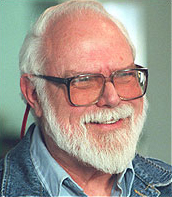
Donald Murray

So I wrote the piece, sent it to friends from my UNH days for comments, sent it to Don for his comments – which were generous and incisive – and sent it off to the editor of the special issue, where I was told it would be published by the next autumn. A long time ago I worked in daily journalism and was spoiled me in terms of how quickly I expected turnaround in terms of publishing. Still, I have learned to work within the pace of academic publishing and do not get bothered in the least by the one- or two- or even three-year wait to get something published. But I never imagined this length of time.

In the eight years that passed between the writing of the essay and its publication, a lot happened in my life. I had three books published, ended up a full professor, spent a term as first-year comp director, and watched my sons graduate from high school year.

Also, Don Murray died. In terms of this essay, that last fact is certainly the saddest. I had hoped it would come out before his death in winter 2006, not so much because it mattered whether he knew that the piece was published, but because I wanted the essay to be read as a conversation with a living scholar and not as a memorial. Now nobody else was going to get a chance to talk with him except through his writing.

Things moved on. The publication date got posted each year, and then that date passed. The special issue concept passed through another editor before falling apart completely. But at least the folks at Enculturation finally decided to just publish it on its own. It’s sort of out of place in terms of subject matter and tone as a stand-alone article in that journal and I wonder if anyone will ever read it. But, if they do, maybe it will be a different audience than I expected to reach.  I am grateful that it didn’t disappear completely and that they saw fit to publish it at all.

When the editors contacted me and said they were going to publish the essay, they gave me the option of revising and updating it. I read it over again and decided that, with the exception of an explanatory footnote about when it was written, not to change it. I like the passion of it from that time, and decided that the way I framed the argument when Don was still alive is the way I wanted to leave it.

Even so, the publication of this piece has encouraged me to stop and look at what I wrote eight years ago and notice a few things about the distance between the writer I was then and the one I am now. First of all, I was a little surprised to see that there wasn’t more that I wanted to revise. Essentially I think I was still right about my appraisal of Don’s work and that he had often been misrepresented because he had not actually been read in any depth by most rhet/comp scholars. And I think I was right in that his most radical stance, of making student writing and student experience the core of a writing course is an attempt at making teaching truly “student-centered” in a way that most writing teachers are not comfortable taking on. I think this vision of where knowledge is generated is substantially more like the work of Freire than most people realize. But, rather than repeat the whole argument here I should just let people read it.

What I also find intriguing in the in the essay though, is my writing voice. There is a tentativeness about it that reflects where I felt I was as an assistant professor without many publications. Were I writing today about writing from experience, about using the “personal” (whatever that is) in writing I think I’d be less tentative, maybe a bit less passionate. Less defensive, more confident. Maybe it’s the difference between my writing/teaching self that has not changed as much as my “professional” self that is situated by institutions and disciplines. I wouldn’t change a lot in the essay, but the tone in places would shift enough that, while it would still be me it would be a different “me” than eight years ago. As it should be, I suppose. And I suppose that’s a comfort as well.

Learning to Play Well with Others

Sometimes I can’t decide what kind of writer and scholar I am. I don’t mean in terms of the quality of my work (I have my own anxieties and suspicions there). No, I mean in terms of how I prefer to work. I used to think I was best on my own. I like conceiving of projects by myself, researching alone, certainly writing alone. I used to encourage students to collaborate, and admire people like Kate Ronald and Hepsi Roskelly who seemed to collaborate so productively and imaginatively, all the while thinking of how I wasn’t much in favor of it myself.

Yet, having just finished work on an edited collection – a collaborative project with my dear friend, Amy Zenger that we just sent off to the publishers this week, I realize that I’m not the moody loner I sometimes imagine myself to be in my more flamboyantly romantic moments. And when I look back over the books and articles I’ve done in the last few years – and what projects I’m contemplating in the future – I see, along with my single-authored pieces, collaborative work with a number of different people. So clearly I do enjoy working with others. Part of what I’ve realized is that, sometimes, collaborations in which I’m invited to join a friend’s project, push me into new areas of ideas and scholarship, and pull me out of any tendency toward scholarly isolation. On top of that, they often force me to follow through with work I might otherwise leave aside.

But this latest project also helped me remember that sometimes loosening my grip on an idea, actually helps it grow. I had the idea for New Media Literacies and Participatory Popular Culture Across Borders when I was writing Shimmering Literacies. I realized while researching Shimmering Literacies that the students I was talking with and observing were often engaged with popular culture and other fans from countries around the world. Clearly, then, studying how participatory popular culture expanded and shaped literacy practices needed to look at students and texts beyond the U.S. Initially I thought this would be a chapter in Shimmering Literacies, but then also realized it was too big a topic for one chapter. In addition, I knew that it was a project I could not study adequately from Louisville, Kentucky, or understand fully from my perspective as a white, male from the U.S. If any project called out for the diverse voices of an edited collection, it was this. And I also knew I needed help to think about this project from someone who could broaden my thinking about texts and about crossing cultures, and thankfully Amy agreed to go in with me on the book.

Yet even as I realized I wanted to bring in diverse perspectives around the world for the project, deep inside I can now also see that I still had a particular approach to the subject matter that I wanted to see in the book. Deep inside, I was still writing the missing chapter of Shimmering Literacies. The thing is, when you get an edited collection in which the contributors come from Australia, Nepal, Lebanon, the U.S. South Africa, Qatar, and Turkey, not only is the subject matter going to be varied, but so are the perspectives on the subject, on how to engage in research and scholarship, on theory, and on the writing itself. While I was fascinated by the material we were receiving, I realized I was becoming frustrated because it was not always conforming to my initial vision. This was not going to be the tightly focused book I had originally been thinking about.

I was fortunate that Amy helped me get over myself. She helped me realize the power in having a more creative, varied, and expansive set of views of the focus of the book. She was right, of course, because that was the whole point of doing an edited collection. When I finally embraced that expansive conception of the book and realized the power of the different writing voices, different approaches to epistemology, different cultural contexts, I became even more excited about the collection we were putting together. It was a lesson that I need to keep in mind, not only for my scholarship, but also for my teaching – but more on that in a coming post.

So what we wrote in the introduction, is very true:

The collection itself also reflects the diverse opportunities and practices within participatory popular culture. As the contributors sent us their chapters, we found that their conceptions of participatory popular culture and literacy often challenged us to expand and rethink our own. What you will not find in this book is a lock-step set of definitions or scholarly approaches to this subject matter. The contributors not only represent a number of different countries, but also several different academic fields and approaches to research and scholarship. We encouraged these authors to demonstrate how their scholarly backgrounds and local cultural contexts led them to conceive of the issues involved with participatory popular culture across borders. The result is a book that ranges widely on this subject, but around every corner provides new and provocative ways of thinking about how people in different cultures work with and respond to the affordances of new media and popular culture. The effect is a book with intriguing juxtapositions, unusual connections, and often unexpected tensions and insights, all drawn together by the idea that literacy as a social practice is being changed by participatory popular culture in a transnational world.

Letting go a bit, listening to others, and learning from them – I may need to be reminded about it now and again, but I am glad I can still learn to let it happen.

University of Louisville Writing Center Blog

The consultants here at the University of Louisville Writing Center (where I am the director) have started a blog. They’ll be writing about their work with writers, their thoughts about writing and writing pedagogy, and just life around the Writing Center. It’s definitely worth a visit! Thanks to Barrie Meadows for making this happen. Come see what’s up with the Writing Center. (You can also visit our website – soon to undergo major renovations – or visit us on Facebook).

The University of Louisville Writing Center

Enjoying the fast water

On the one hand, trying to sort through where the changes of digital media have left the study of literacy and rhetoric can seem daunting. The change is often so fast, occasionally so transitory, and in such volume (whether I mean the quantity of information or the level of conversation, I’m not certain) that I often feel as if I am standing hip-deep in fast water while juggling.  It seems all I can do to keep my balance, stay in one place, and keep aloft the balls I currently have in the air. As I noted when I started this blog, the press of time, work, and living a daily life as best I can, sometimes makes that balancing act all I can accomplish without diving deeper into the waters of technological and textual change.

Yet, at the same time, when I don’t focus on the speed of the water, and I take the time to get a better sense of my surroundings, I am less unsettled by what is happening around me. Of course, digital media are changing some fundamental opportunities for communicating, and those changes are, in turn, changing our conceptions of text, audience, authorship and more. Still, when it comes down to it, I don’t know that I see our essential jobs as literacy and rhetoric and writing teachers and researchers as changing. We’re still about the creation and interpretation of texts. Though it may be crass to quote myself, I’m keep coming back to the definition of literacy that I have written before:

For me literacy is connected to the way humans communicate ideas, concepts, and emotions to one another.  Humans are meaning-making creatures and we have learned to do so by creating representations of our ideas that can be interpreted by others when we are not present. I see it as important, then, to keep literacy connected to the communication of ideas through representation, whether of words, images, graphics, and so on. In this way literacy can apply to writing print on a page, arranging images and words on a webpage, or arranging images and words on film or video. Each example illustrates the arrangement of signs or symbols or images to represent ideas. For this book, my working definition of literacy, at its most basic and yet most varied, is the ability to use sign systems to compose and interpret texts that communicate ideas from one person to another.

Having this definition of literacy seems no big deal to me. Perhaps it comes from a background, academically and professional, that was not in English departments until I came back to graduate school. Or perhaps I can trace this position to having always been a movie freak and a photographer. Or maybe it is that I worked extensively with photography and audio and graphics in concert with writing during my education and (brief) professional life as a journalist. Whatever the reason, this seems to me not only to be the way literacy should be defined, now and in the past, but to point me toward what I think the purpose of literacy education (including rhetoric and writing) should be for us today. But more on that in days to come (I’m trying to learn to write shorter again, for the blog).

More to come….

Agency

It was a fascinating conversation in class the other night, with a lot of good ideas circulating. What has continued to rattle around in my head is the question of digital media and agency. Cope and Kalantzis, in “New Media, New Learning” argue that one of the genuinely different aspects of digital media is the way in increases individual agency when it comes to creating, responding to, and publishing texts.  I don’t think anyone would argue that they are right that individuals have the opportunity and technology available now to publish and distribute their ideas that was unthinkable twenty years ago. As someone who was trying to get my short stories published back then, and had no venue for publication aside from established magazines and journals, I think there is no disputing that part of the point Cope and Kalantzis make (I say as I type on my blog).

But the question that came up in class concerned the effect of those efforts to write and publish individual texts. Does “agency” mean only the ability to publish, or does it also mean that the action achieves a sense of empowerment, change, critical or political or emotional growth on the part of the writer? If agency is more than the action, but is also the effect on the individual, then have digital media really changed that much? Is writing this blog, which may not be read, that different to my sense of agency than writing the journals that I have kept for decades? Or, how much agency is allowed in a digital world that is increasingly bound by the imperatives  of global capitalism? How much agency is provided to me if I am just doing the marketing work for corporations? What kinds of composing and communication with digital media could actually have an effect on our individual – or collective – sense of agency?

More to come…

My Thing About Blogs

I’ve wondered, over the past decade, why I have been hesitant to start a blog. It’s not a matter of thinking that there aren’t ideas on blogs worth reading. It’s not that I don’t value the interactive nature of blogs. It’s not that I don’t value a collaborative approach to knowledge generation or that I haven’t learned from some of the blogs I have read. You know, some of my best friends write blogs.

Yet I have hesitated writing one myself and I don’t even follow as many as I should. Indeed, if it wasn’t for the course I’m teaching this spring, I wouldn’t be writing this now. But that raises for me the question of why, if I am interested in writing, in popular culture, in digital media, haven’t I joined in with a blog? And I’ve come to several tentative conclusions that this project, this blog will put to the test.

The first question is one of time. Blogs began to emerge when I had two young children at home and was also director of the university composition program. I had priorities. Family came first. After that, depending on the time and the emergencies, I could turn to research, teaching, and administration. The reality, however, was that after family and other professional obligations such as my administrative responsibilities, there was only so much time for writing. And, if there was only a limited time for writing, I was going to spend that time writing in venues that I knew would be peer-reviewed, edited, and possibly even read, such as books and journals (and count toward tenure and promotion). I had to be very disciplined about what I read and wrote in order to get that work done. Exploration and musing time was going to be taken up by my family. There just wasn’t time for any other writing. Even now, as I write this, I find myself wondering what will happen to my words. Will anyone read them or is this just wasted typing? I’m well aware of the t-‘shirt that reads, “More people have read my shirt than your blog.” Even with my sons now in college, I find myself squirming at the possibility that I am engaging in wasted type, in wasting time.

The second question is how I work as a writer. Although some people think I write quickly, thanks to an early background in journalism, the reality is that I both do and don’t. On the one hand, I can bang out words very quickly and am willing to get a piece finished and off to an editor without dithering over it forever. Yet the key to that previous statement is “off to an editor.” If I don’t have a sense that there will be someone to look over my work and offer suggestions and critique, I can still write quickly, but I publish slowly. As a journalist and when I publish in books and in journals there are editors — and now reviewers — to help me, to prod me to new ideas, to save me from sloppy thinking and writing. Without the collaborative relationship I have with editors, I get nervous about my writing. I edit and re-edit and re-edit emails to try to be sure I am communicating what I want to say. I am trying desperately to avoid rewriting this paragraph again and again. I don’t like putting writing out there that is less than my best or that others have not been able to help me improve. I’d rather not say stupid things, poorly written, in public. And, if I have to rewrite and rewrite every blog post, that brings me back to the question of time.

People with blogs, when I tell them how I work as a writer, tell me that I will get that feedback from the comments to my blog (if anyone reads it). The blog can serve as a space in which I try out my ideas and get responses that help me develop those ideas. Which brings me to the third question. Although I rely on digital media, study it, love it too much sometimes, at my core I’m a face-to-face person. As anyone who knows me can attest, I like to talk through ideas.  I would choose to meet at the local coffee shop and talk over my latest project with a trusted friend, than try to sort it out through writing (and I always prefer to talk over dissertation chapters with graduate students than provide written comments).  I also scribble lots of notes and write ideas down and I keep private journals that are informal and rambling, but in terms of working through ideas with other people, I would always choose to talk in person.  Why? Upbringing perhaps, I was raised in a family of talkers (my former sister-in-law said we were an “oral culture”). Or maybe it is that I need the body language and non-verbal communication involved in the conversation, or perhaps the speed with which I can modify and respond to ideas.  Or maybe I just like the companionship of corporeal beings. For whatever reasons, I like to talk through ideas.  I love teaching in a face-to-face classroom so much and dread the idea of online teaching, not because I think the latter can never be effective, but because of the joys I get from the former. It also explains why my teaching always involves conferences with students.  And, as I noted above,  when I write for publication of any kind, from books to email, I compose carefully to try to be as precise as possible. (I just rewrote the previous pedestrian sentence about four times. I’m not saying it always makes my writing precise or elegant, just that I try.)

Finally there are the connected questions of permanence and impermanence. On the one hand, I know that any blog post may have a long life online, even if I choose to delete it next week. As someone who has already talked about being careful in what he writes, the idea that the uninspiring blathering of this post will exist out there, attached to my name, for decades, doesn’t comfort me. If I’m going to create texts that will exist for a long time, then I want to be careful of how I write, and that gets me back to problems of how I spend my time as a writer and scholar.  The flip side of this coin in impermanence, or the possibility that my writing in this venue may disappear just as easily as I’ve written it, and that the work will have been wasted. And this last point will be the focus of my next post.

So what’s the point? That blogging is not for everyone? Or at least not for me? Or that I need to loosen up and give it a try? I certainly have felt somewhat defensive when talking (face to face, by the way) to friends with blogs. Given my interest in digital media and writing, it has seemed like a weakness in my background. Now, however, as I prepare to teach a graduate seminar in New Media and Composition Pedagogy, it seemed as good a moment as any to try it out for a semester and see if my resistance to the endeavor changes through practice, or if this is a just a one-time experiment.

More later.