Shimmering Literacies – My Blog

Literacy and Identity – That’s the Easy Part

In a convenient confluence of thoughts and events, I’m coming up on my Fulbright term in January at the same point that I’m ready to start off on another big project. You’d think I’d planned it that way.

This is the stage at which things always seem to get a bit fraught, though. Possibly even dicey. Because I’m getting to the point where the big, amorphous idea needs to get significantly less blobby. I’ve been saying for a while, to myself and to others, that my next project is going to focus more on “literacy and identity.” Fair enough. Also accurate to say that it will take place on Earth and be subject to the laws of physics. All of that will be true, but it’s all so broad and general as to be of no use. Understand, I am a big proponent of the blobby, amorphous stage of research. For about four months I’ve been doing a lot of note taking/noodling on the page, talking with friends, pondering on walks, about the possible contours of this project. These wanderings and noodlings have been useful in helping me run out various tracks of thought to see which ones continued to be interesting and which, in the end, ended up in the high grass of boredom or impracticality or incomprehension (the latter being stored away for further, later exploration). In many ways, exploring the blobby-verse of an idea are some of my favorite times. Everything is possible. Everything is potential.

Still, there comes the time where a path needs to be chosen, a die cast, a choice made (no metaphors here I really like, by the way) etc, etc. With that choice, there is the thrill of progress. With that choice, there is also the regret of the other choices not made, as well as the anxiety that I’ve made the wrong choice. I’ll head down my path, happy enough. But could I have been happier down the other road? What if the other item on the menu that I didn’t order was really what I wanted? Or, even worse, what if the path I chose leads again only to high grass? And, to be honest, the six-month window of the Fulbright at the University of Sheffield brings with it a certain pressure as well as an amazing opportunity. I don’t want to squander this amazing opportunity and the chance to work with people I admire so much by chasing down the wrong road, setting sail in the wrong direction (still no good metaphors, but you get the idea…) In general, I’m not a person given to regret. Nostalgia, perhaps, but not regret. But at moments like this….

Maybe the image that captures it is Michael Caine, teetering with his crew on the edge of the cliff at the end of the The Italian Job, trying to assure everyone that, “Hang on, lads; I’ve got a great idea!”

It helps me empathize with the graduate students I work with who often talk of feeling a similar anxiety when about to commit to a dissertation idea. What I tell them is true enough: That any idea that intrigues them and yields no easy answers is an idea worth pursuing. I know that too. And I know that a focus is emerging out of the noodling and talking and wandering. I know that I have enough of a focus now to help me start with conversations and observations and work in Sheffield. And I know that, not knowing too much now will help me be surprised and let me follow what I find, rather than shaping my experiences and encounters to fit a pre-fabbed idea of what the research should be. I know that.

So I should trust my process, trust my interests. And that clearer focus will be the subject of future posts. Hang on, lads. I’ve got a great idea!
Watson Conference and Economies of Writing

With another Watson conference come and gone I’m appreciating the opportunity to reflect on the good conversations I had with friends and colleagues. There were, of course, many different ways people responded to the theme of the conference – “Economies of Writing” – but I have to say that I found myself particularly drawn to the material critiques of writing in the university. It’s easy to get caught up in the daily work of teaching, administration, working on individual projects, and put aside the darker implications of the evolution of the university into an increasingly outsourced, privatized, corporate entity built on the backs of contingent labor. If that last sentence sounds familiar it’s because so many have said things like that before me. In fact, we here it so often that we stop hearing it, shrug, and slog on. It seems so relentless and inevitable, that our efforts against it feel like trying to turn back the tides.

What I liked about the conversations at the conference, at least many of them that I was involved in, was the consistent move toward thinking about action. There were critiques, sure, but people seemed less content to end at critique – and expect a pithy book or article to change the world – and instead kept trying to imagine practical, direct ways to challenge the dominant culture of efficiency and profit, to imagine ways that would make the classroom, the program, the university a tangibly different place. Tony Scott’s presentation on rethinking writing program assessment to include issues of labor or Asao Inoue’s exploration into who if “failing” composition courses and what that means, or Wendy Olson’s work on translingual students in two-year college programs all make direct connections to material conditions, and then pushed the audience to think about what this meant for practical, daily life in the university – for faculty and students. (While not as elegantly theorized as these, I was happy that my small bit on Blackboard, economies of scale, and the imposition of such systems in top-down, rigid manner also ended with the same kind of practical moves.) None of these or other of the excellent presentations will change the university in an instant. But I’m grateful to the conference for reminding us of the importance of paying attention to material conditions, and to do so in a way that avoid easy slogans and easy demonizing of others. And, I appreciate being reminded that, in terms of change, pushing the rock a bit every day, building on powerful critique, has the potential to create practical change. I can almost feel optimistic.

Teacher as the Enemy? Again?

My father used to say that there were three things people always thought were better when they were young: religion, sports, and schools. He was right that, in all three instances, there is often a hazy nostalgia for the old days when religion was meaningful and sincere, when noble athletes played for the love of the game, and when school was place of discipline and rigor. Like all nostalgia, such memories tend to be faulty and created primarily to reassure ourselves with soothing narratives about our own lives. Unfortunately, when it comes to education, they are narratives that also contribute to a political climate that is proving destructive to education.

Anxieties about education tend to rise in bad economic times when the middle-class begins to worry about whether the cultural capital schools are supposed to impart will continue to be transformed in the economic capital that keeps them in the middle class. As I’ve written about elsewhere, there is a perpetual education crisis in this country (though the crises of the past seem to be forgotten when the youth of yesterday grow up to be the productive adults of today). Unfortunately, this time around, it seems to be targeted more than usual at teachers.  And so I can’t help but rant a bit.

The rhetoric surrounding the recent strike by Chicago teachers as well as the release of the movie “Won’t Back Down,” reinforce a punitive, anti-teacher attitude that is continuing to wear down the teachers I know. In this particular narrative, contemporary teachers are money-hungry, lazy union hacks uninterested in the learning of their students. It’s fascinating to me that high pay for teachers is always seen as problematic in a culture that reveres high pay for corporate executives and others in the business world. (And don’t get me started on how teachers get paid too much for all the “time off” they have. There are any number of studies that demonstrate that most teachers work close to 60-hour weeks throughout the school year, more than making up for any “time off” they get over school breaks. What’s more, most teachers now are buying many of their own supplies for their students, something not exactly expected of those in the business world.) But, somehow, the representation of teachers has continued to deteriorate in recent years. Teachers often used to be portrayed as stiff and perhaps a bit drab, but still important. Now they are portrayed as the worst thing about schools (unless of course they are they one, heroic, “teacher who cares” who transforms students in a single year,)

Clearly, I don’t buy that teachers are the core problem in schools. Of course there are less-than-effective teachers in many of our schools. But it’s deeply discouraging that so many people see the solution to that problem to be to berate teachers, begrudge them reasonable pay, threaten them with hypersurvelliance and dismissal, and then hope they flock to the profession out of their commitment to children. It may be human nature to lash out at the personification of the education system, but it’s not going to make education better – it’s not even going to make poor teachers teach better (news flash: more testing does not make for better teacher – a topic for another day).

What the anti-teacher rhetoric keeps us from discussing are the systemic problems in the way we approach education. By focusing vitriol on teachers, we’re not talking about the growth of bureaucracies, at all levels, that mandate more and more paperwork from teachers – a problem that comes from policies from all political sides, by the way. We’re not talking about how the demonization of government that began under the Reagan administration has drifted down into the perception of schools. As a culture we’ve begun to bring into schools the myth that the private market and competition are always better in every endeavor in life and that everything can be quantified or it doesn’t matter. As a teacher who has worked with students of many abilities and many levels, I can tell you that the best teaching I’ve done, and the best learning my students have done, could not be quantified in any way. What’s more, my best teaching is not spurred by “competition” or “efficiency”, but grows from collaboration and support. Education that responds to a world in which flexible thinking and engagement and literacy is the key, does not emerge from rigid testing regimes and punishing teachers. I’m not the first person to say many of these things, I know. It just frustrates me so that we seem to be making so little headway against the anti-teacher rhetoric.

The irony here is that, for many of the conservative politicians decrying public education and calling of testing and punishment, have not learned the lessons of their own upbringing – or the upbringing of their children. The most affluent public and private schools spend their money on small class sizes, individualized instruction, and lots of arts, music, and creative ways of thinking about solving problems and creating knowledge. These affluent schools trumpet such approaches to education in their public documents and affluent families send their children to them with great pride.

Yet, as a culture, Americans don’t want to believe in culture. We want to believe that every achievement comes from individual effort alone. Material and cultural influences on individuals are antithetical to the punitive, Calvinist view of life that Americans cling to. It’s all about predestination – you show forth your true character through your grades and, if they are inadequate, you deserve to be  punished and shunned.

The sad part of all of this is that the teacher-bashing so fashionable right now won’t make teaching any better. For one thing, great potential teachers, like the brightest undergraduates I teach, shy away from teaching because it has been made to look like a thankless, embattled profession. What’s more, punishment is rarely the best way to get someone to improve their work. Of course there are weak teachers in many classrooms. Yet you’re not going to identify weak teachers only through standardized testing – lots of weak teachers can drill students on limited content to pass a test. We need to begin by creating more flexible, nuanced methods for assessing how teachers are doing in the classroom that include looking at a range of student work and observations of teaching. In addition, there needs to be more support for teachers in terms of mentoring, in terms of resources, in terms of smaller class sizes. And we need to be willing to pay for education, big time.

Yeah, ok, a guy can dream right?

Sorry for the rant. I wish it had made me feel better.

Literacy in a Material World – in the Writing Center

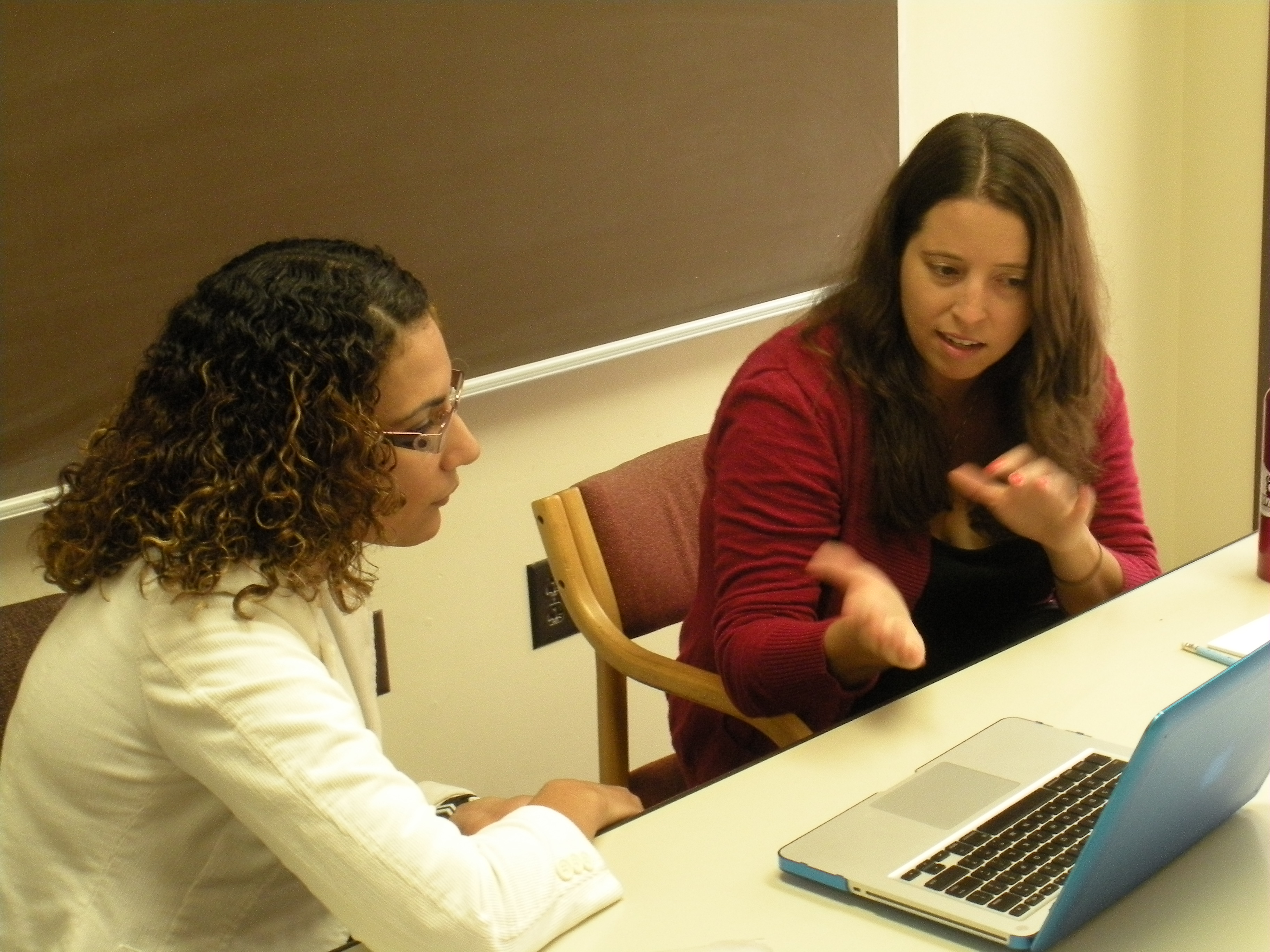
As I mentioned in my previous post, working in a writing centerreveals the fluid nature of materiality/immateriality when we think about literacy. The material context of literacy can be immediate in a writing center. Students sit down with a draft, an assignment they’ve been handed in class, maybe their notes or a book they’re writing about. Their material text is the focus of their concern and it quickly becomes the focus of our concern as well. The classic image of writing center work is the consultant and student sitting at a table, leaning toward each other, talking intently about the draft in front of them. It provides the focus of the conversation and work on the draft is the central motivation for the student.

What’s more, how the consultant responds to the material text has been a oft-discussed part of writing center scholarship over the years. Should it sit in front of the student or between the student and consultant? Should the student read aloud from the draft? The consultant? If the consultant writes on the draft, does that appropriate agency from the student as a writer? These are all questions that have been on the minds of new consultants to our Writing Center that I’ve been working with the past couple of weeks. If we focus on the images in the writing center, the questions about the text, and the concerns of the student about the draft, if would be easy to imagine that the material artifact is central to our concerns.

Yet, even as the consultant works on the text in front of her, there is a powerful tradition among writing center scholars and consultants that maintains that the material text is not the most important element of the consultation. As I mentioned before, writing centers often drag out the oft-used Stephen North quote that their job should be to produce “to produce better writers, not better writing.” It’s a compelling quotation and I don’t disagree with it – and I’ve pulled it out myself more than once in teaching new consultants or talking about our Writing Center with faculty. Yet, as the students in my Writing Center Theory and Practice course proved the other day, pull out the term “better writers” and begin to unpack it and you quickly find yourself in the realm of the immaterial considerations of literacy. We try to tell ourselves that we know what a “better writer” is, and how to help a student become one. Still, every attempt at the definition leads us to the kind of abstraction that we recognize as elusive and endlessly contextual.

In much of Writing Center scholarship, this conflict between the material text – and the student’s focus on improving that text – and the immaterial goals of creating better writers – often ends with either a lament about students’ inability to get beyond their focus on the material text understand or a somewhat condescending satisfaction that we know what is best for students (even if they don’t recognize it) and should continue to work toward our immaterial goals.

What if we took a different approach? What if we made the tensions between the material artifact on the table and the immaterial concerns of the consultant part of the explicit conversation during the tutoring session? What if the first set of questions consultants’ asked not only addressed the students’ concerns about the draft that motivated them to come to the Writing Center, but also at the less tangible questions about writing that concern us? What if we did a more explicit job of grappling with the abstractions with students first – and not just at the conclusion of the session – and used that as the framework for considering the material text?

If we think that students are intelligent and deserve our respect, let’s not play games about the agenda taking place during a consultation.

More soon.

Literacy in a Material World – Or Not.

The number of administrative emails I’m getting means the summer is clearly about to be over and the new academic year is on its way – the large wave I can sense just beyond the horizon. So, after a summer away from the blog – with some work and some play – I’m drawn back here to start trying to work through some of the things that I’ve been kicking around since May.

In work terms, the highlight of the summer was time spent at the University of Sheffield, both at the Center for the Study of Literacies conference, and in talking with people about plans for my Fulbright there in January. Once again, the conference was a great experience. Small, focused, yet full of surprises, I found myself filling page after page of notes from people like Jennifer Rowsell, Lalitha Vasudevan, Cathy Burnett, Guy Merchant, and Jackie Marsh.

This year the presentations and conversations kept coming back around to the connections/issues/possibilities of how we conceive of literacy as constantly moving between the material and the immaterial. Whether it is the pondering of what being “literate looks, sounds, or feels like” (from Lalitha Vasudevan) or the ways in which children on playgrounds embody in their play the texts they’ve been reading/playing online (Jackie Marsh), or the question of how we think of literacy when it inhabits both the material and immaterial at the same time. This final idea, or the fluid nature of literacy in terms of the material and immaterial has been sticking with me since the conference in July.

Jennifer Rowsell gave a splendid and thoughtful talk about the fluidity of literacy as it exists in the material and immaterial simultaneously. On the one hand, a text, in whether on paper or screen is a material object, and requires material resources to produce. Yet what is produced is simply representation, marks or images on a page or screen that are only meaningful – or bothered with – as immaterial representations of other ideas or things. Literacy is not a material thing. It’s a concept, a skill, an argument. Yet it is perceived by the creation of things. Her talk had been thinking about how the strength of print in particular is its ability to represent the immaterial – emotions, ideas, dreams – and yet can only do so through writing words that are material, but always incomplete representations. And one implication of this fluid sense of the materiality and immateriality of literacy is that it helps explain some of the confusion and conflict that exists in the culture at large when conversations turn to literacy. On the one hand, because there are material artifacts, it seems as if literacy is something we ought to be able to define, categorize, assess, know when we see it. Yet, because all we are seeing in the artifact are incomplete representations of the immaterial, because it is impossible to determine what being literate looks and feels like, any method devised to categorize literacy through work with the materiality of texts inevitably is either simplistic and unenlightening, or contextual and complicated to the point that it isn’t useful (like a map in a Borges story) or is rejected as impractical by institutions interested in efficiency and summary. I think anyone in literacy and education has felt the frustration of others outside the field who push for material and direct – and simplistic – assessments of texts we know to be complex and nuanced.

There are also implications in other areas of our work too. For example, as director of a Writing Center I’m not above trotting out the old chestnut about how the goal of Writing Centers is not just to create better writing, but to create better writers. It’s not that I think that’s a bad philosophy (though I think as many have pointed out there are complexities there that need continual unpacking). But it is the case that when we talk about better writing or better writers, we are also dealing with a situation where a constellation of  material and immaterial concerns come together in subtly complex and shifting ways. The simple concept of having a draft the student wants to improve moves quickly from the material text the student and consultant are reading to the immaterial goal – and perception – of “improvement.” And this is just the start and doesn’t even begin to get at issues of embodied responses, the immaterial presence of the instructor who wrote out the material assignment and so on.

There is much, much more to work on here and I’m only musing on the surface for now. In the meantime I want to point anyone toward the much, much smarter exploration of some of these issues that will be coming out soon from Jennifer Rowsell, Guy Merchant, Kate Pahl, and Cathy Burnett.

For me this conversation came along at a the perfect time as I begin to ponder a new project that will bring me back to the territory of literacy and identity (more on that to come in time.) And, as won’t be a surprise to some who know me, I also found that it connected me back to popular culture and literacy issues (and more on that to come sooner).

Once again, my thanks to the organizers of the conference (Kate Pahl and Julia Davies) and the all the participants who talked of such a range of ideas and perspectives with generosity and insight. More to come soon.

What Can You Accomplish in a Week? Part 2

It’s the last day of the UofL Writing Center Dissertation Writing Retreat. As I mentioned in my previous post, one of the questions I was pondering was what the participants attending could expect to accomplish in a one-week retreat. Obviously, no one was going to write an entire dissertation. So what would constitute a successful week for the writers? The consultants and Writing Center staff?

As the week is drawing to a close, one thing is clear – the energy and attitude around the entire week has been positive and productive. The commitment of the participants to writing every day and then engaging in individual consultations has been impressive and inspiring. What’s more, the discussions about writing during the group writing workshops – from problems and obstacles to aspirations and solutions – have been enlightening and useful to everyone involved. My sense is that all the participants feel they have had a productive week.

Yet beyond the words written and pages produced, the people involved in the retreat have talked about other things that they have learned or been reminded of during the week.

First, you can’t underestimate the value of having extended, dedicated time for writing. As one writer noted this week, in the busy lives of graduate students where research and writing must be balanced against other demands of work and family, it is easy to think that writing can be squeezed in as one of a number of simultaneous, multitasking obligations. She was reminded, however, how much difference it made to her writing and thinking to simply have a quiet space and extended time to write and focus on writing. Of course that’s not always possible. But several of the writers have mentioned how they plan to continue to block out some time each week in this way to get some writing done, and may very well come back to the Writing Center to do it. (And we welcome them! We have a great space with the best view on campus.) At the same time, we also talked about the benefit of writing on a regular basis, even if it’s only a sentence or two a day, and how that will keep the writing and thinking close by and accumulate pages faster than people realize.

Also, the participants in the retreat have mentioned how useful it has been to receive the ongoing, timely response and feedback that their consultants have given them during the daily writing consultations. It can take a long time to get comments back from dissertation committee members (and I am as guilty as anyone in sometimes having trouble getting drafts back to my students). What the writers this week have talked about is the benefit of being able to talk about their writing while it’s in progress – and to have those conversations focus on the issues of rhetoric and writing. As Don Murray used to say, there is no substitute for being able to show your writing to someone who makes you want to go back and write and revise more. My hope is that these writers will continue to get that kind of response and conversation both from visits to the Writing Center as well as in writing groups they may form.

Finally, there was the benefit of being part of a community of writers. Writing a dissertation – writing anything, really –  can feel like such an isolated and lonely endeavor. This week all the participants in the retreat found themselves in a community of writers. They’ve talked about the benefit of the support that comes from talking with peers about writing issues and getting both suggestions as well as empathy. They found that talking, and often laughing, about writing, even when your field is far removed from writing studies, can be enriching. And they also found that simply being in a room with other people writing can inspire them to continue to put create words.

A good space to write, productive consultations, and a community of writers – from where I stand that’s an incredible week and a testament to the great writers and consultants and staff that made it all possible.

A special thanks to the participants:

Naouel Baili, Tanvir Bhuiyan, Brynn Dombroski, LeAnn Bruce, Alex Cambron, Anis Hamdi, James Leary, Mohammadreza Negahdar, Zdravko Salipur, and Charlos Thompson.

And a thanks to the Writing Center staff:

Ashly, Bender, Robin Blackett, Laura Detmering, Becky Hallman, Jennifer Marciniak, Barrie Olson (who had the idea and did the research to plan the retreat), and, of course, Adam Robinson.

And thanks to Beth Boehm and the School of Graduate Studies for their support for the retreat.

We’re all tired, but very happy. For more on the Dissertation Writing Retreat, see the UofL Writing Center Blog.

What Can You Accomplish in a Week?

Tomorrow is the start of the first Dissertation Writing Retreat at the University of Louisville Writing Center. This is the first retreat like this we’ve held (and, yes, I absolutely refuse to call it a bootcamp). We’re excited about it and I think we’ve got an intriguing combination of time for writing, mini workshops, eating and relaxing, and individual consultations organized for the ten participants. I’m delighted that it’s going to happen (thanks Barrie, Adam, and Laura) and that we have a range of participants from disciplines as diverse as Engineering,Humanities, Social Work, and the Medical School.

But there is one question that continues dig at me a bit – as it may for the participants who will be coming to the Writing Center tomorrow: What can we really accomplish in a week?

If I think about a good week of writing – make that a great week of writing – I might hammer out a dozen pages or so, and that’s only if I’m really organized and know what I want to do with whatever the project might be. More likely, even on a good week, I get a couple of good days of producing a lot of words, and then I have days in between of making notes, staring at the screen, going back and moving things around, looking again at my notes and the books I’m using, and so on. I certainly don’t think I’m atypical when it comes to academic writers. So, again, given the scope of a dissertation of a few hundred pages, what can we really accomplish in a week?

My thinking at this point – and my hope – is that we might give the participants a jump-start to their writing, some energy to go forward, make even some extra confidence. (That’s why it’s not a bootcamp; we’re about support, not trauma.) More than that, I’m hoping that the combination of writing time and daily consultations might help the writers reframe their writing habits and approaches so that they can work more effectively to finish their dissertations. So it’s not about the pages; it’s about the processes. And I hope they’ll keep coming to the Writing Center (and will tell their friends). To see what happens you can also visit the Writing Center blog during the week.

I’m thinking it will be a great week of writing and talking about writing. Tune in later and I’ll let you know.

Words by Day, Images at Night

I want to take a moment to note one of the intriguing things I have noticed over the years about working with words and images.  It comes down to this: I do much better writing with words in the morning, and much better in working with images at night. I can remember this split being the case since I started taking journalism courses lo those many decades ago. I always preferred writing in the morning, working in the darkroom or with layout at night (not that I was always given a choice.)

Now, even as I’ve moved from typewriters and film to computers and video, I still find myself working this way. I find that writing comes to me more easily, and that I think I produce better quality work, when I get down to it just as I hit my second cup of coffee. When I try to write in the late afternoon, it’s more of a struggle. By nightfall, forget it. I can’t even compose a decent email by late evening.

When it comes to working with images or video or design, however, I feel much more comfortable with the media and the work as the day moves on. Again, I can work on a video in the morning, but I feel clumsy and the indecisive. By late in the evening, though, I’m charged up and eager to go. And, again, I think I make better choices, produce better multimodal texts later in the day. This is most pronounced with video and images, but works still with design of web sites.

The thing I’ve been puzzling over is why I have this split in how I work with different texts depending on the medium and mode. It could, of course, be that I just got started working this way many years ago and have just convinced myself of something that is really nothing more than an unexamined habit.  But it doesn’t feel like that. I have no idea whether there is any research on cognition that would come anywhere close to explaining this, but I rather doubt it. And I certainly don’t expect that my individual experience is in any way generalizable. Yet I have to remain curious why I feel such a split in when I best write  in print and write with images. I do wonder if, in the morning, the kind of linear, word-based thinking comes more easily because my mind isn’t so cluttered with all the other words I’ll be encountering in the rest of the day, in reading and in conversation (since that is mostly what I do all day). I know that part of my trouble writing later in the day is getting focused on a writing project when my mind is still writing emails and talking with students and reading papers, and so on. So, by late afternoon and evening, the associative work of composing with images and design moves me out of words into new media that feel fresh and unexplored. If this is part of the reason for the split, I might feel differently if I spent the day editing video. Writing print in the evening might be a welcome change.

And it leaves me wondering if others feel this way? And, ever the teacher, is there something here that I can communicate to students that will help them move among composing in different modes and media? For now, that’s some words for this morning.

New Media Literacies and Participatory Popular Culture Across Borders – It’s out and about!

It’s out and about. New Media Literacies and Participatory Popular Culture Across Borders is officially published. You can follow the link above or just click on the book cover to the left. It’s been a great experience, from the fine work by the authors to the ease of working with Routledge.  Now to see if anyone else will read it.

As always with a project like this, I get to the end and the people involved have just raised so many thoughtful questions that I find myself wishing to have the time to do another volume, and another, and…. But today, it’s enough just to say this book is out. Thanks to one and all.

Traveling Different Roads at the Same Time

A month goes by in a hurry before I’m back on the blog. A pressing deadline for a book chapter and some teaching to do came first, throw in a conference, some dissertation chapters to read, and the daily life in the Writing Center and suddenly…well, we’ve all been there.

Still, even though it’s been almost a month since 4cs, that’s where my mind is on this rainy Saturday morning. As usual, the conference was a good time and a good time to talk with smart people, plan new projects, and eat good food. Oh yes, and there were sessions to attend. Two in particular stuck with me.

First, I went to hear Doug Hesse, Nancy Sommers, and Kathi Yancey  read the work that came out of a writing project in which they each wrote about a different object each day for thirty days. As they described the project, it was driven by their interest in questions such as, “What may be learned about the evocative power of objects from a sustained attention to them? How do objects reveal or conceal their origins? And what may we learn about the acts of composing from a sustained project over thirty days?” Certainly all of this was contained in the work they did. For me, though, it was a powerful reminder of the power – and the joy – of the essay. Each of the works was a beautiful and insightful exploration of ideas, of possibilities, of connections. As I listened to each author read, I not only was taken inside the consciousness of another person, but I was taken deeper into my own. Doug’s reflections on music and identity, Nancy’s on food and family, and Kathi’s on images and histories, had me simultaneously following their journeys, and thinking about how similar objects and experiences in my own life had led to my questions about identity, family, and history. All  three essays were immediate and powerful reminders of how writing works as way in which we explore our own minds, and then invite others inside. I may be going on too much with the adjectives here – particularly “powerful”  – and yet the power of writing as an individually and collectively transformative experience and medium is what I have been continuing to think about since the session. That session is moving me back to my own essays, though they’re not of the quality of these authors’ work. But it was reminder that writing in print does something special – it opens up the interiors of life to us. And I hope it was a reminder to those at the conference that teaching college writing should be more than about thesis statements and academic discourse. It also should be about the exploration of ideas and the transformation of our ideas. If you want to see a similar project the three writers did at a conference and then turned into published work, track down “Evocative Objects: Reflections on Teaching, Learning, and Living in Between” in the March 2012 issue of College English.

The next day, then, I heard Richard Miller talk about literacy in a digital media world. Richard pointed out that he doesn’t publish in conventional academic venues anymore, whether in print or online.  (You can find his great site/blog/ideas at text 2 cloud.) He then proceeded to remind the audience that everything we know about writing, reading, communication, authorship, and everything connected to it is changing, and changing again, and changing again. He’s not the first to point this out, of course, but he made the compelling case again for how, in a field about composing and interpreting texts, we’re like the folks standing at the end of downhill train, looking backwards down the track and wondering what those things are zipping by so fast. I don’t disagree with him at all. If there’s anything my conversations and observations with students have shown me time and again is that they are engaged with digital media in ways that are often very different in their conceptions of time and text than ours. Don’t get me wrong, I don’t buy into the “digital natives” idea, that young people are completely different in how they engage with texts and we can’t understand what they do blah blah blah. But I do think if we want to understand how they read and write and communicate, we can’t assume it’s the same way we read and write. And we have to talk with them, work on digital media with them, and play around with it ourselves. That means more than using print, it means we have to learn to compose with video and images and sound (and I’ll  have more to say about that soon too.)

It would be easy to find these two session, both of which I found inspiring and intelligent and insightful, at odds with each other. But that wasn’t the case.  Doug, Nancy, and Kathi used digital media and images with their essays to create multimodal performances, and Richard’s presentation was an essay as well as a digital presentation. And I know that none of these ideas are brand new, they were just done so well that they revived my thinking and got me motivated to get back to my own work. Besides, conflict wasn’t what I felt. Instead I felt the thrill of having so many things open to me as a writer and teacher, and a bit overwhelmed – in an excited way – about everything there is to do. The question is not which road I want to follow, but how to travel multiple roads at once.