The Secrets that We Keep (Or try to…)

Virginia Heffernan, one of my favorite writers in the New York Times and on digital and pop culture issues, has a succinct and vivid analysis of the growing cultural awakening about privacy and email.  It’s not that a lot of us — including her I’m sure — haven’t known this for a long time. If the 1’s and 0’s of digital media allow us to store and send information in multiple forms, at lightning speeds, and over vast differences, they also allow for multiple was of finding and decoding that same information. What’s changing, according to Heffernan, is the growing awareness in the culture at large of the potential public nature of something as ubiquitous as email. As she writes:

It’s the rare Web-user who’d willingly submit his own e-mail archive to prosecutorial scrutiny. LDL (“Let’s Discuss Live”), for those who have the option, is an extremely good idea. Nearly everyone needs some form of communication that’s not searchable, archivable, forwardable, discoverable and permanent.

It’s not a moment to be nostalgic for the days before email, but it is another notable moment of cultural change in how we perceive our digital lives. As more people begin to have a visceral sense of the lack of security, she notes that more and more people are reverting to that unencrypted, but familiar way of passing intimate information — in director, embodied, conversation.

The One-Way Bridge, Part 2

At a conference last week I heard several people defend the approaches to popular culture and literacy pedagogy that I define as the “One-Way Bridge.” They talked of the ways they would ask students to talk or write about popular culture texts so that material could become the content for class discussions or assignments that would help the students become more successful at school-sanctioned reading and writing. Yet at the end of their comments was often a question about why students still seemed to resist such efforts. Why, they would ask in mild frustration, shouldn’t the students be more excited about having popular culture “brought” into the classroom?

When they describe their attempt to connect to students’ interests, however, I hear descriptions similar to what I have observed in classes from middle-school to universities. There is an attempt, an exercise or discussion in which the teacher solicits material or ideas about what the students read and write outside of school. Yet what often happens is, after a few minutes, the teacher begins to drive the students over the one-way bridge to show how their work outside of school can be transformed into more valuable school work. It’s not that this is necessarily a wasted effort, but many students I talk with describe these moments as ones in which they feel as if they’ve been had. And the result of this pedagogical bait-and-switch, before too long, is that students begin develop a wariness of being asked about their out-of-school literacy practices. As one university student put it to me, in a disdainful tone of voice, “You know that if a teacher asks about movies or music you like, their just going to turn it into the lesson for the day. I’ve figured that much out.” Many students learn to regard these moments in the same way they do as a teacher-designed digital project that feels to them like a “creepy treehouse” — they learn to stay away, or perhaps play along, but keep their most interesting ideas to themselves.

Part of the allure of popular culture, including digital texts students manipulate themselves these days, is that they feel a sense of control over the interpretations, the uses, the emotions of the film, TV, games, and websites they encounter. The only assessment involved in popular culture — for them and for the rest of us — comes from our own tastes and our discussions with our friends. School work, on the other hand, is all about assessment. Now, more than ever, students have learned that the “lesson of the day” will always be graded — and that it only counts and is worth learning if the teacher grades it. It is easy to see, then, that if the students see school work as always involving the assessment of an adult, it is the antithesis of what the sense of control, pleasure, and mastery they feel when they read and compose with and about popular culture.

There are a lot of reasons this happens in the classroom and very few of them are because the teachers have nefarious motives. Instead I think that, for some teachers, there is a genuine belief that the bridge should only allow travel in one direction and that their responsibility is to bring students over that bridge to the literature and literacy practices valued in school. That’s an ethically defensible position – one that I happen to disagree with – but understandable. For other teachers, the pressure of standardized assessment and the standardized lesson plans that go with such assessment leaves them feeling they have little room for straying from traditional school-based literacy practices. For still others, there may be a sense that popular culture content may get out of control, bringing controversial work and disturbing representations into the classroom.  I believe there are answers to all of these concerns, and others, that I will continue to write about soon. But we first have to realize that a fake two-way bridge isn’t fooling anybody.

The One-Way Bridge

For a long time there has been a lot of discussion in literacy and writing education,  at both the K-12 and college levels, about “using” popular culture as a “bridge” to the print literacy genres and forms more valued – and more certain to be assessed – in the classroom. Yet it’s clear, in this metaphor, that this is a one-way bridge. The novel, the poem, the essay, the argument-based article, the research paper, all continue to be the desired destination for students in this model. Sure, we can start with the mindless and fun pop culture stuff, but then we cross that glorious bridge to the golden fields of print texts and critical thinking.

Obviously, I’ve got some problems with this model. To begin with, I’m less-than-convinced that no critical thinking goes on in the composing and interpretation of popular culture texts (and let’s remember that, today, students may very well be composing or commenting on pop culture online as well as reading it). And I’m also not the first to point out that the medium does not determine the quality of a text. There are plenty of bad novels, great films, excellent television series, and so on. Yet, while those points are worth making again (since they still seem to have not reached a lot of people), my problem with the model today is its single direction. Why must we assume that the only learning worth happening in school takes place when the base influences encountered outside the classroom are turned into the gold of academic literacy and texts? Why not, instead, approach all of the literacy practices, in the classroom and out, as connected? Why not engage students in ways of thinking about audience, detail, style, emotion, analysis, or anything else we want to teach them about reading and writing, as important ideas to consider regardless of the text and the context? Rather than approach popular culture as something to be left on one side of the bridge as students move on to more “important” work, why not help them see how the literacy and rhetorical practices we are teaching them will bring them knowledge and pleasure in all the part of their lives?

I know this is a difficult case to make, as the Core Common standards are not only generally hostile to this concept, but even more try to separate reading and writing into distinct, rather than connected, activities (more on that soon). I do take some heart in what Leslie Burns pointed out at IRA in terms of the language in the Common Core Standards that leaves some room for teaching about multimodal and digital and popular culture literacy practices. But even with that, it’s going to be an argument.

What would it take to convince literacy and writing educators and scholars to imagine a two-way bridge?

Teaching Literacies with Digital and Pop Culture Media for Grades 4-12

I’m off to Orlando and IRA (the International Reading Association) tomorrow to be part of an all-day workshop with some wonderful scholars and teachers. The workshop, “Teaching Literacies with Digital and Pop Culture Media for Grades 4-12,” includes Margaret Hagood, Donna Alvermann, Barbara Guzzetti, and many others whose work I have admired for a while now but have never had the chance to work with.

I’ll be talking about “Rethinking Reading and Writing with Participatory Popular Culture,” which continues the research from Shimmering Literacies. I’m focusing on how digital media are not only changing students conceptions of interpreting and composing texts, but blur the line between the practices of reading and writing in ways that have implications for how we teach reading and writing in a multimodal culture.

So I am grateful to be included in this workshop and looking forward to the presentations and conversations. I plan to learn a lot.

More to come next week, both about the workshop and end-of-semester reflections on the “New Media and Composition Pedagogy” seminar.

New Media Literacies and Participatory Popular Culture Across Borders

The edited collection Amy Zenger and I have been working on, New Media Literacies and Participatory Popular Culture Across Borders, has been accepted for publication by Routledge Press.  The book will include contributors from South Africa, Nepal, Lebanon, Qatar, Turkey, Australia, and the U.S.  We’ve got some great and eclectic chapters and are excited about this project (and grateful for Routledge for agreeing to publish it).

The book has two central areas of focus. First, the book explores the ways in which new media and online technologies are shaped by, and influence, the connections and tensions between transnational popular culture and local cultural practices. Participatory popular culture raises new questions about the interplay between the mass popular culture and local audience members. This collection will explore the role of new media in the economic and cultural debates about “globalization” and how those are complicated by the local uses of popular culture texts. Technologies that allow an individual to not only access popular culture texts from around the world in an instant, but also share, comment on, appropriate, and remix those same texts alter the way the way the individual perceives popular culture, and alter his or her sense of agency in regard to the texts. New media technologies have changed the relationship between mass popular culture text and individual users, and they engage individuals in new ways of negotiating language and culture.

Those negotiations of language and culture define the second focus of the collection: the influence of participatory popular culture on the literacy practices of young people. Through cross-cultural participatory popular culture, young people are engaging with and responding to global audiences in ways and to an extent simply not available to previous generations. Though we should, of course, be wary of being naively celebratory in our approach to studying these practices, there is no denying that many young people are in contact with texts and people around the world through the lenses of popular culture: Popular culture provides the rhetorical, linguistic, and semiotic building blocks through which they engage in cross-cultural discourse. They encounter these texts on a global stage, deal with issues of difference and unfamiliarity, and then rebuild them in local contexts. While their practices and ideas are certainly shaped by the popular culture content that corporations produce and distribute around the world, it is also the case that young people are appropriating and reusing these same texts to perform identities and make meaning in their own lives.

The chapters in this book, then, analyze how young people are interpreting, creating, and distributing popular culture texts across cultures, and study how young people are thinking about the role of culture in defining the nature of texts, the negotiations of language use, the employment of rhetoric, and the construction and performance of identity.  The individual chapters offer many different perspectives about local responses to these global forces from scholars working in a wide range of international contexts.  How do young people access transnational texts online, but then respond and rework them according to their local contexts and concerns about identity? How do these online practices influence their approaches to reading and writing, both with print as well as with images, sound, and video?

It’s a very different world we live in now, and exciting to be around.

Enjoying the fast water

On the one hand, trying to sort through where the changes of digital media have left the study of literacy and rhetoric can seem daunting. The change is often so fast, occasionally so transitory, and in such volume (whether I mean the quantity of information or the level of conversation, I’m not certain) that I often feel as if I am standing hip-deep in fast water while juggling.  It seems all I can do to keep my balance, stay in one place, and keep aloft the balls I currently have in the air. As I noted when I started this blog, the press of time, work, and living a daily life as best I can, sometimes makes that balancing act all I can accomplish without diving deeper into the waters of technological and textual change.

Yet, at the same time, when I don’t focus on the speed of the water, and I take the time to get a better sense of my surroundings, I am less unsettled by what is happening around me. Of course, digital media are changing some fundamental opportunities for communicating, and those changes are, in turn, changing our conceptions of text, audience, authorship and more. Still, when it comes down to it, I don’t know that I see our essential jobs as literacy and rhetoric and writing teachers and researchers as changing. We’re still about the creation and interpretation of texts. Though it may be crass to quote myself, I’m keep coming back to the definition of literacy that I have written before:

For me literacy is connected to the way humans communicate ideas, concepts, and emotions to one another.  Humans are meaning-making creatures and we have learned to do so by creating representations of our ideas that can be interpreted by others when we are not present. I see it as important, then, to keep literacy connected to the communication of ideas through representation, whether of words, images, graphics, and so on. In this way literacy can apply to writing print on a page, arranging images and words on a webpage, or arranging images and words on film or video. Each example illustrates the arrangement of signs or symbols or images to represent ideas. For this book, my working definition of literacy, at its most basic and yet most varied, is the ability to use sign systems to compose and interpret texts that communicate ideas from one person to another.

Having this definition of literacy seems no big deal to me. Perhaps it comes from a background, academically and professional, that was not in English departments until I came back to graduate school. Or perhaps I can trace this position to having always been a movie freak and a photographer. Or maybe it is that I worked extensively with photography and audio and graphics in concert with writing during my education and (brief) professional life as a journalist. Whatever the reason, this seems to me not only to be the way literacy should be defined, now and in the past, but to point me toward what I think the purpose of literacy education (including rhetoric and writing) should be for us today. But more on that in days to come (I’m trying to learn to write shorter again, for the blog).

More to come….

Agency

It was a fascinating conversation in class the other night, with a lot of good ideas circulating. What has continued to rattle around in my head is the question of digital media and agency. Cope and Kalantzis, in “New Media, New Learning” argue that one of the genuinely different aspects of digital media is the way in increases individual agency when it comes to creating, responding to, and publishing texts.  I don’t think anyone would argue that they are right that individuals have the opportunity and technology available now to publish and distribute their ideas that was unthinkable twenty years ago. As someone who was trying to get my short stories published back then, and had no venue for publication aside from established magazines and journals, I think there is no disputing that part of the point Cope and Kalantzis make (I say as I type on my blog).

But the question that came up in class concerned the effect of those efforts to write and publish individual texts. Does “agency” mean only the ability to publish, or does it also mean that the action achieves a sense of empowerment, change, critical or political or emotional growth on the part of the writer? If agency is more than the action, but is also the effect on the individual, then have digital media really changed that much? Is writing this blog, which may not be read, that different to my sense of agency than writing the journals that I have kept for decades? Or, how much agency is allowed in a digital world that is increasingly bound by the imperatives  of global capitalism? How much agency is provided to me if I am just doing the marketing work for corporations? What kinds of composing and communication with digital media could actually have an effect on our individual – or collective – sense of agency?

More to come…

New Media and Composition Pedagogy – a course

This week is the first meeting of my graduate seminar on New Media and Composition Pedagogy.  First of all, I’m not thrilled about the title, but it wasn’t chosen by me, so I’ll just leave it at that.  Like all new preps, however, it has been an interesting process over the last few months of thinking through what this course could, should, and would be. This is a course that was high on the list of seminars graduate students wanted to see offered, and that hadn’t been offered here before, so  was happy to take it on. But that, in some ways, raised the stakes in my head as I began to think about how I should craft the course. My initial move, as it is with almost any new prep, was to think too big. I found myself thinking I would have to cover the history of computers and composition, current theories of multiliteracies, a good chunk of practical classroom material, new media theory, film theory, and so on and on and on. In short, I had the material for five or six courses, easy.

This realization brought with it the inevitable winnowing and reducing and, with luck, some sense of coherence. I realized that I had a problem with the kind of scholarship in computers and composition that focused on one kind of technology as the hottest new thing and the balm to all pedagogical ills. Having watched trendy new technologies or software packages rise and fall over the years (a topic for another post, perhaps), was wary of investing too much of the time and energy of the class on specific technologies and their applications. Instead, I decided that I needed to ground the course in some of the more abstract and theoretical things that digital technologies have changed in how we approach literacy and writing. What does digital technology actually allow or ask us to do differently than we might have done before, regardless of the platform or software? Again, there was more even in the answer to this question than I could cover in one semester, but I decided to focus on several key concepts, such as collaboration, multimodality, databases as texts, and the instability of texts.  We will read theoretical pieces that help us understand the implications of these shifting concepts, and then look at some current practical applications (and play with some of the toys ourselves). Yet, with luck, the theoretical work will allow us all to respond to the next new application or software that might come along (the next YouTube or Twitter or Wiki) and understand how it grows, and perhaps diverges, from current technologies. And, of course, it’s a course of mine, so we will also spend some time prowling around issues of identity and politics.

As with any class, I am dissatisfied with the syllabus as soon as I distribute it. But, I will be intrigued to see how this one shakes out and will be discussing it in this space.

The class starts tomorrow. Stay tuned…..

Impermanence. Or why I don’t do my reading on a Kindle yet

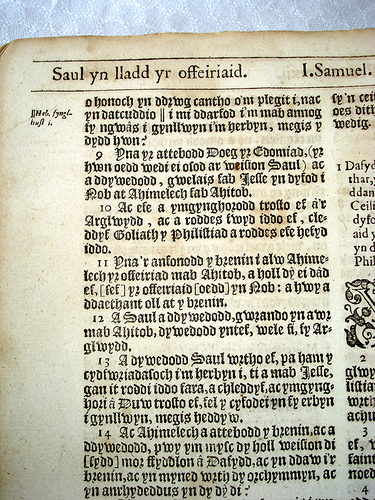
I do my scholarly reading, and much of my other reading, with codex books. This is not because I have some romantic attachment to the material heft and feel of books, as some converts to ebook readers and IPads are convinced must be the only reason people like me would stay with the codex. (Though it does make me pause to pick up the Bible that was passed down through my father’s family, published in Welsh in 1832, and ponder who has picked it up and read it before me. I feel a sense of connection that material items, be they books or dishes or furniture can provide for us that, at least at this point, the rapid planned obsolescence of digital hardware seems unlikely to match.)

But the 1832 Welsh Bible, and the other old books I own, are part of my reason for being cautious about ebook readers for my scholarly work. I can read the books published 100 years ago, or 200 years ago or longer. But I have lots of digital material that is unreadable.  Take, for example, the 5 1/4 floppy disks on which I wrote my MA thesis and my first short stories, which are now available for use as coasters. If I hadn’t printed those stories out, they would be lost. Of course I could also have moved them, time and again, to 3 1/2 disks, then to CDs, then to a hard drive or thumb drive, if I had remembered and not lost things along the way. But my point here, and I’m certainly not the first one to make it, is that digital technology changes very quickly and, if you’re not careful, you can end up losing material on which you have worked very hard.
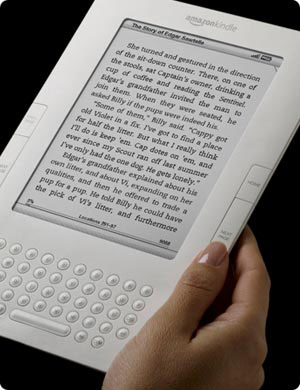
So, back to the Kindle (or Nook or IPad).  I’m not at all against digital texts. I love being able to download journal articles and post them on to friends online. It is a HUGE convenience. But, when I have something I need to read, annotate, and keep, I print it out or buy the codex book.  As a nerdy academic, I write a lot in my books. Questions, notes, summaries, ideas, rants, you name it. And I return to those notes, in those books, a lot, in both teaching and research. My problem with ebook readers then, is twofold. First, the annotation systems I have seen have yet to impress me as being as quick and efficient as my pen in hand — particularly not for someone like me with big hands and thick fingers. There is a reason I am not a surgeon (several, actually) and I have a very hard time with tiny buttons. But, even more to the point, I am unconvinced that the ebook reading technology I might use today (including annotating texts on my laptop) will necessarily be around 15 to 20 years from now. Unless I constantly move all my books and articles from one medium or machine to the next upgrade,  I could lose them, with my notes in them. As someone who just the other day pulled a book off the shelf I hadn’t looked at in about 15 years, but found the notes and ideas and text I was looking for just when he needed them, I do not want to risk losing that material. What’s more, I don’t want to have to take the time to transfer the digital files when that time comes, or risk not having the software or hardware to read them.

I could be wrong, of course, and the ebook texts with annotations on them may last forever. Yahoo, I say. I hope it’s true. But I can’t risk it for now. So, for now, I read codex books, not primarily for sentimental reasons, but for desperately practical ones.

Oh yeah, one more thing. I’m really clumsy, or absent minded, or both. I drop things, particularly books, all the time. I’m hard enough on cell phones. My finances rejoice at the idea that at least books bounce.