We all need readers – celebrating the Dissertation Writing Retreat

As I write this sitting in England, I know that back at the University of Louisville they are getting ready for the last day of the University Writing Center’s annual Dissertation Writing Retreat. All week a dozen Ph.D. students from different disciplines across the University, have been coming to the Writing Center each day for a day full of writing, individual consultations, and mini-workshops about dissertation writing. It’s a week that is a great benefit both to the writers and to the consultants and staff. Blog entries both from the Writing Center blog from this year and from last year here (as well as some entries of my own from last year, here and here) give you some flavor of the event and the impact it has on everyone involved. While I have had a fantastic spring being on a leave where I have been able to focus on research, I do miss much about the work and the community in the Writing Center – and in particular the community, productivity, and satisfaction that takes place at the Dissertation Writing Retreat.

The importance of the Dissertation Writing Retreat for offering a space for graduate students to not only work on their writing, but to engage in conversations about the conventions, craft, and processes of scholarly writing, is all the more vivid to me given the conversations I have had with graduate students here. While there is no doubt that the graduate students I have met with here, at a number of different universities, are getting support and feedback from their dissertation directors, it is also clear that, for most of them, there is not the additional support for writing that we offer back at the UofL Writing Center. Of course it is essential to learn about research methods and ethics and to have guidance about the content and analysis of a dissertation. Yet it is equally important to remember that writing in a new genre – and a dissertation-length work is always a new genre – must be learned. Such learning comes from explicit conversations about genre conventions, from feedback that focuses on rhetorical concerns, and from attention to the processes of writing and revision for scholarly research writing. The UofL Writing Center – like many writing centers – offers that kind of response. And even if a dissertation director is offering good, rhetorically focused writing response, just having another set of eyes on a writing project is always helpful. (One of the students I am currently directing is taking part in this year’s retreat and I am delighted that she is having another person to offer thoughtful responses to her writing.) Offering thoughtful and constructive response and criticism is something we do at the Writing Center every day, for all members of the University community, not just at the Dissertation Writing Retreat. There are only a few writing centers (or writing centres) at British universities (though some, as at the University of Coventry are doing excellent work). And too often here, as in the U.S., Writing Centers are thought of as having only a remedial mission, rather than serving writers at all levels, for all purposes. I am grateful to the staff at the UofL Writing Center – Adam Robinson, Ashly Bender, Nancy Bou Ayash, Jennifer Marciniak, Tika Lamsal, Barrie Olson, and Matt Wiles – as well as all the participants, for making this year’s retreat such a success and for proving, once again, the value of good writing response for all writers. I miss being there and wish you luck with the final day of writing.

Literacy in a Material World – in the Writing Center

As I mentioned in my previous post, working in a writing centerreveals the fluid nature of materiality/immateriality when we think about literacy. The material context of literacy can be immediate in a writing center. Students sit down with a draft, an assignment they’ve been handed in class, maybe their notes or a book they’re writing about. Their material text is the focus of their concern and it quickly becomes the focus of our concern as well. The classic image of writing center work is the consultant and student sitting at a table, leaning toward each other, talking intently about the draft in front of them. It provides the focus of the conversation and work on the draft is the central motivation for the student.

What’s more, how the consultant responds to the material text has been a oft-discussed part of writing center scholarship over the years. Should it sit in front of the student or between the student and consultant? Should the student read aloud from the draft? The consultant? If the consultant writes on the draft, does that appropriate agency from the student as a writer? These are all questions that have been on the minds of new consultants to our Writing Center that I’ve been working with the past couple of weeks. If we focus on the images in the writing center, the questions about the text, and the concerns of the student about the draft, if would be easy to imagine that the material artifact is central to our concerns.

Yet, even as the consultant works on the text in front of her, there is a powerful tradition among writing center scholars and consultants that maintains that the material text is not the most important element of the consultation. As I mentioned before, writing centers often drag out the oft-used Stephen North quote that their job should be to produce “to produce better writers, not better writing.” It’s a compelling quotation and I don’t disagree with it – and I’ve pulled it out myself more than once in teaching new consultants or talking about our Writing Center with faculty. Yet, as the students in my Writing Center Theory and Practice course proved the other day, pull out the term “better writers” and begin to unpack it and you quickly find yourself in the realm of the immaterial considerations of literacy. We try to tell ourselves that we know what a “better writer” is, and how to help a student become one. Still, every attempt at the definition leads us to the kind of abstraction that we recognize as elusive and endlessly contextual.

In much of Writing Center scholarship, this conflict between the material text – and the student’s focus on improving that text – and the immaterial goals of creating better writers – often ends with either a lament about students’ inability to get beyond their focus on the material text understand or a somewhat condescending satisfaction that we know what is best for students (even if they don’t recognize it) and should continue to work toward our immaterial goals.

What if we took a different approach? What if we made the tensions between the material artifact on the table and the immaterial concerns of the consultant part of the explicit conversation during the tutoring session? What if the first set of questions consultants’ asked not only addressed the students’ concerns about the draft that motivated them to come to the Writing Center, but also at the less tangible questions about writing that concern us? What if we did a more explicit job of grappling with the abstractions with students first – and not just at the conclusion of the session – and used that as the framework for considering the material text?

If we think that students are intelligent and deserve our respect, let’s not play games about the agenda taking place during a consultation.

More soon.

The simple art of listening to – and caring about – what students say

Time for a bit of rant today.

I was at a local conference on teaching recently, doing my dog-and-pony show about how students engage with digital media outside the classroom and the implications for how we approach teaching reading and writing (I’m never certain, by the way, whether I’m the dog or the pony in this particular show.) This was for a group of faculty and graduate students across a variety of disciplines. People were pleasant and polite and there were some productive questions. But, during and after the session, I was struck, as I often am by the surprise among some faculty at the idea of having ongoing conversations with students about what students know. Then I did a guest lecture at another campus and there were similar questions, and a discussion thread on a professional online list I follow went the same direction. As I said, what surprises me is that the idea of starting our teaching by talking with students about what they know still strikes many people as radical. What disheartens me is the attitude of far too many faculty and instructors that what students know is irrelevant or uninteresting.

There’s always a lot of talk in my field about having a “student-centered classroom” and often discussion about whether we should do so. But, from what I see, this is a non-issue because too often I see attitudes that are barely “student-tolerant,” let alone “student-centered.” There is so often such a lack of respect, at least at the college level, toward students. “They don’t want to do the work,” “They can’t read and write,” “I won’t read their course evaluations as long as I have a Ph.D. and they don’t.” “What they know outside of class is what I’m trying to teach against.” Sigh. No one students come into our courses wary, beaten down, and wondering about the relevance of anything we are trying to teach them. As a writing program administrator, one of my hard and fast rules has been no mocking of students and student writing – even among ourselves. It is, of course, immature, unethical, and disrespectful to do so. It is also exactly what students fear we are doing with their writing. If we don’t take their work seriously, why should they? Do we want our writing mocked by colleagues, editors, reviewers? I can’t enforce this rule, but I do try to make the point that teaching is an art of patience and compassion as much as of the transfer of knowledge.

I’m no saint. I get frustrated with students who are resistant, or seem unwilling to do the work, or dismissive of what I’m trying to teach them. And sometimes I think they are truly resistant and we won’t reach them. But, at the risk of going a bit Yoda on all this, I think underneath so much of what is performed as resistance and boredom is fear and anger – fear of not understanding or of being assessed and found failing once again, and anger at feeling belittled, humiliated, and treated condescendingly. When I find my frustration rising, I try to remind myself that you never, never know when you might get through to the resistant student. One cutting remark now might make me feel better, but loses that student in my class forever. But continued respect may allow that student to receive another comment later in the semester in a way that is productive and, once is a while, transformative. I was often a resistant student as an undergraduate. I can see myself in the student sitting in the back of the classroom, slouched in a chair, daring someone to try to teach him. The teachers I responded to were the ones who communicated respect for student ideas and created meaningful assignments. We could all tell the difference. So much recent research on student writing shows that students respond best – and by best I mean productively able to incorporate instructor comments into their writing – to instructor comments when the comments demonstrate a clear respect for the intelligence and ideas of the student. This doesn’t mean we don’t offer critique and suggestions, but just that we see students as intelligent people with ideas worth communicating, as people who want to be heard and respected.

People often ask me why I am interested in research about popular culture and student literacy practices. There are lots of reasons (I mean, I like watching movies too). But one central reason is that I am continually interested by the literacy practices students engage in outside of the classroom. Unless we understand how they read and write in the majority of their time and how they have learned about rhetorical concepts such as audience or genre or authorship, we can’t teach writing and reading effectively. And, if we want to understand the texts they engage with most often outside the classroom, we need to look at popular culture, whether it is television, movies, social networking, music, or video games. I am continually convinced and inspired by the basic ideas of pedagogy from Dewey and Freire and Murray – we have to start with what students know and help them find was to engage critically with their own knowledge. My guess is that, for anyone reading this entry, I will be preaching to the converted, so maybe it’s a waste of time. But a rant sometimes just needs to be ranted.

Again, I’m no saint. And, I know many, many excellent teachers who treat their students with respect and learn a great deal by engaging students about what they learn outside the classroom and then help students learn things that will make them more creative and critical readers and writers in our classes and at home. For every comment I hear at a conference or online that makes me want to climb the walls, there are far more that are supportive and respectful toward students. And, just as with students, I try to maintain a respect for my colleagues and continue to try to convince them that we need to listen to our students as the first act of teaching.

End of rant.

Ideology, surveillance, and the software in our classrooms

I’ve agreed to write a chapter for a very exciting new collection being edited by Robin Goodfellow and Mary Lea, titled Literacy in the Digital University (Robin’s blog on the same subject is here). I’m grateful for the opportunity to be part of this project. My chapter is going to explore how “course management software” is shaping our pedagogy – in and out of the classroom – in ways we both understand and ways that may be more subtle. More to the point, though, is that I think the construction and use of this software (Blackboard and the like) is often antithetical to what we regard as good writing pedagogy and the effective uses of digital media.

So here’s where I’m going with this right now. Course management software, such as Blackboard, is purchased by universities and often required of faculty and students for everything from distribution of course materials to posting of grades. This software is promoted by university administrations as a set of effective pedagogical tools for use both in and out of the classroom. Yet such software is often hierarchical, rigid, and prescriptive – the antithesis of the kinds of participatory environment most conducive to creative thinking by students and faculty. It is imposed on teachers and students from the top down, difficult to modify or customize, and makes assumptions about teaching and learning that, again, tend to be rigid and hierarchical.

I see the adoption and promotion of such software  as driven by material and ideological imperatives of efficiency, control, and surveillance that are increasingly central to way the institution of the university works in contemporary culture. Course management software is promoted by university administrations as an efficient and centralized method of “managing” university courses. Faculty response to the use of such software is often to complain or shrug, and acquiesce to the demands of the institution. Yet in doing so we are complicit in reproducing institutional and cultural ideologies that are as hierarchical, rigid, and prescriptive as the software. In this way dominant ideological conceptions of knowledge and literacy – tied to notions of efficiency – find their way into writing classrooms even as we may imagine a pedagogy that will encourage students to resist such conceptions.

So in the chapter I hope, at least in part, to argue that university-imposed course management software works to reinscribe particular conceptions of epistemology and pedagogy that, as a field, we have criticized in other settings. I think it is important that we think critically and act more explicitly to resist the implementation and uses of these forms of digital media. We much also teach students to approach the use of these technologies from a more critical perspective.

But all is not grim. I refuse to give up without a fight, an alternative. So I also want to talk about how alternatives to designing digital environments for writing pedagogy that allow students a range of ways to participate in literacy practices in ways that are flexible, critical, and creative. But I’ll save more of that for the next post (which won’t be so long in happening, I promise. January was just crazy on many levels.) More soon.

Genre, Interfaces, and Ways We Teach Digital Writing

I was having coffee the other day with my friend and colleague Ryan Trauman and we got to talking about how we approach teaching people to compose texts using digital media. Trauman is both brilliant theoretically and proficient with technology in ways that I can’t touch. So, when he talks, I listen.

What was interesting – to me anyway – about our conversation was how it revealed our two very different ways of coming at this question. Trauman starts with a conceptual discussion of how software is constructed. He talks with people, on a conceptual level, about ideas such as “layers” and how they show up in different software. His belief is that, if people understand the underlying conceptual frameworks of the software, they can move from one program to another and, eventually, find a way to use any software to create the texts they want to create. This is particularly important for people who are inexperienced with and/or intimidated by digital media technologies. So he begins with the theory and logic underlying the media and helps people understand the tools they have at hand. (And I hope I’m portraying his approach accurately.)

I would approach the same group of people in a different way. I begin by talking about multimodal genres with which people are already familiar – television, film, newspapers, webpages, and so on. We talk about the characteristics of those genres and how they work to communicate ideas and engage audiences. So, for example, we might begin by talking about the nature of the “shot” in film and how shots are edited together to create scenes or narratives, or how images can lead a person through a web page. My goal is to help them to articulate the kinds of texts they want to create, and the genre characteristics they will use when composing. My thinking is that, if they have a general idea of what they want we can then work through – and play with – the software as a way to make it happen.

Neither of our approaches is necessarily better than the other. (And they’re not mutually exclusive or the only ways to approach the teaching of digital writing, of course.) The conversation has had me thinking about the effect of our approaches on our students. Trauman helps people feel comfortable through the machine, and by having a good sense of the tools at hand allows them to work in ways that no doubt help them use the interfaces in more embodied and internalized ways. I can imagine that, as a student of Trauman’s, I’d be able to start using the software in less self-conscious way that would help me focus on the ideas I would trying to communicate – much as I do when I type. That’s a great result to have from teaching.

My approach, by starting with familiar texts and moving from those to rooting around in the software for ways to make genre-connected moves, I hope gives students a particular awareness of the rhetorical characteristics of genre they’re working with as well as an awareness of the deep knowledge of previous texts and genres they can bring to their composing. In this way it’s similar to the ways in which, as we read, and then write with print we begin to draw on the craft and rhetoric of what we’ve read to create our own texts. As the novelist Caryl Phillips has said, “All writers read for plunder.” In my approach, I don’t think I address a familiarity with the tools, and the anxiety about the uses of the software as well as Trauman does, and in his he may not help students connect to the genres they know well as explicitly as I do.

The point here for me, though, is not a critique or endorsement of either or our approaches, for I can see merit in both. What interests me is how we came to those approaches and the effect this will have on our students. My guess is that, like me, Trauman’s approach reflects his own patterns of work and comfort. I know that, even as I read a lot about pedagogy and teaching writing, I tend to gravitate toward the concepts and approaches that fit my ways of working and learning. It’s not that I may not see value in other ways of teaching and try to bring those to the students I work with that I think might benefit from those methods. But, truth is, I what and how I teach is inevitably flavored by my experiences, values, ideologies, and so that students who have me in the classroom are presented with ways of approaching writing – whether in digital or print – that is similar in flavor. Because I find genres and genre theory fascinating, and tend to think through writing and rhetoric often through the genres I know or the texts I’m trying to draw from, I bring that to my teaching. This is inevitably effective for some students and less so for others.

We all tend to fall back on our knowledge and our comfortable way of working and then reach out to others through the epistemologies and pedagogies that make us comfortable. In Daniel Kahneman’s book Thinking Fast and Slow he details the many and continuing instances when we allow ourselves to act in ways we perceive as “right” or “better” but in which we may be ignoring alternatives or the problems with our own approaches. So the conversation with Trauman has given me both another way to teach digital writing, as well as a reminder to be more rigorous in thinking about what is implied in my teaching and how I might find other ways to think about the classroom, even if they are harder and less comfortable for me at the beginning. No Earth-shaking conclusion here, I realize, but sometimes being reminded of what I need to know is enough.

Space, Boundaries, and Movement

It’s been wonderful to have a couple of weeks of travel after the conference was over — great times in Ireland and Scotland with family and friends. But I don’t want to miss the chance to talk over the next few posts about some of the ideas that are still turning over in my head from the Sheffield conference on Study of New Literacies.

(First, a side note just to thank Julia Davies and Kate Pahl for a wonderful conference. Not too big, great presentations, and thoughtful and smart conversations, both formal and informal. It did energize my thinking and give me new directions to think about and people to read. I may not mention everyone I spoke to or heard present, but there was much to learn from.)

The set of ideas that I seemed to me to keep coming around in the conference – and that have kept me pondering since – has to do with space, movement, and boundaries. Although they came at the question from several different directions, I was  intrigued by the ongoing discussion of the how our literacy practices are shaped by and shaping the spaces in which they take place. And space here is something that we are inhabiting and creating both on and offline. In fact, one things I was particularly pleased about was the work everyone was doing at troubling the binary divide between online and offline. Instead there was much more recognition about how we not only move on and offline quickly – and all the more so with smart phones and tablets becoming more common – but how difficult it becomes to separate cause and effect, or place and space, between the digital and the embodied. A number of presentations and conversations raised questions of how digital technologies connect us, yet also how they can establish barriers and obstacles that can cause us either to give up, or try to find away around. At the same time, we respond to these digital spaces not just with our minds, but also with our bodies and emotions and bring those back, in turn, to the online places we inhabit.

Cathy Burnett, of Sheffield Hallam University, raised a serious of questions about space, mobility, and boundaries in her presentation on classrooms she is observing. I was fascinated by her descriptions and analysis of the kinds of boundaries teachers often try to create in the classroom – both online and off — in terms of students’ practices (and teachers’ as well). She noted moments when students disrupt such boundaries and how that both brings them into sudden focus, and also challenges us as teachers to define the nature and purpose of the boundary. Her discussion of the ways in which such boundaries shift, open, and close almost moment by moment had me thinking about the courses I had most recently been teaching, as well as what I have observed doing at their computers outside the classroom.  There is an image of students deeply focused on computer screens, oblivious to all around them, is rarely true. Instead, as Burnett’s presentation pointed out, students move away from the screen, use their bodies to shape their interactions with the technology, get up and wander the room, make side comments, even as they continue to post comments on a forum or engage in a class assignment. While there are connections here to ideas like Robert Brooke’s discussion of underlife in the classroom, I like the way she theorizes this not simply as a set of behavior’s, but also as practices located in specific texts and contexts. Her challenge to think of “siting as a productive practice” in which we engage with the mobility and shifting boundaries of our teaching and of literacy practices resonated with me. I can’t wait to read more of her work on this.

It also make me think of how, when students are outside of school they find that they are still navigating these spaces and boundaries, sometimes created in the home, sometimes by those who control online environments, and adapting their reading and writing to the spaces they can find and work within. It made me think of how, in my own research, I see young people working within and around the online popular culture spaces they encounter. As I’ve said other places, while Gee’s idea of online “affinity spaces” as places were people are drawn by interest first, regardless of identity are true to a point, it is also the case that offline identity shapes not only the affinity spaces we are drawn to, but how we react and respond to the interactions once we get there. What’s more, the negotiations of language and culture we have to engage in online affinity spaces seep back into our embodied lives and are not left behind with the computer.

It also connected with comments and presentations by David Barton, Keri Facer, Margaret Mackey, Karin Tusting, Eve Stirling, and others at the conference, and got me thinking more about where my thoughts about my research are taking me next. But that will have to wait for the next entry or two.

The Two-Way Bridge (Part 1)

If I have problems with the metaphor of popular culture being conceived of as a “bridge” from less worthy literacy practices to more valuable and acceptable academic literacies (see below), how do I imagine we can think about creating our pedagogical bridges to carry rhetorical and semiotic traffic in both directions? Or, to avoid driving the metaphor too far, how do approach teaching reading and writing in ways that actually help young people be more creative and effective interpreters and composers of texts in and out of school?

We have to begin with a sincere appreciation of and interest in what students are doing outside of school. Sounds simple enough, right? But so many times I see teachers from middle school through college unable to bring themselves to the point of genuine interest and appreciation for what their students are engaged in outside of school. The reasons I’ve heard given for this reluctance are many, from questions about the legitimacy of popular culture as a subject to be addressed in school to concerns about whether explicitly opening the door to popular culture might bring offensive material into the classroom to fear that the teacher’s lack of knowledge of what is popular with students will undermine authority in the classroom. And the reasons – and there are many more – sometimes make sense to me, but more often do not.

Rather than kvetch about the problems, though, I’d rather think about how we can engage students in  work with digital media and popular culture in ways that enriches their literacy practices in every aspect of their lives. So I’ll be working, over the coming months, on playing with some of those ideas toward a project Dan Keller and I are thinking about, tentatively titled Teaching Convergence Culture.

One place to start is to think about what actually characterizes more participatory learning? Vanessa Vartabedian and the people at Project NML (New Media Literacies) are is doing very exciting work with this. What I want to highlight today, though, is their list of five characteristics of participatory learning:

  • Heightened motivation and new forms of engagement through meaningful play and experimentation;
  • Learning that feels relevant to students’ identities and interests;
  • Opportunities for creating using a variety media, tools and practices;
  • Co-configured expertise where educators and students pool their skills and knowledge and share in the tasks of teaching and learning;
  • An integrated system of learning where connections between home, school, community and world are enabled and encouraged.

I like the succinct and yet expansive nature of these characteristics and the way that they focus on different aspects crucial to learning, such as motivation, location, and role of the teacher.  I’ll have more to say about this soon.

The One-Way Bridge, Part 2

At a conference last week I heard several people defend the approaches to popular culture and literacy pedagogy that I define as the “One-Way Bridge.” They talked of the ways they would ask students to talk or write about popular culture texts so that material could become the content for class discussions or assignments that would help the students become more successful at school-sanctioned reading and writing. Yet at the end of their comments was often a question about why students still seemed to resist such efforts. Why, they would ask in mild frustration, shouldn’t the students be more excited about having popular culture “brought” into the classroom?

When they describe their attempt to connect to students’ interests, however, I hear descriptions similar to what I have observed in classes from middle-school to universities. There is an attempt, an exercise or discussion in which the teacher solicits material or ideas about what the students read and write outside of school. Yet what often happens is, after a few minutes, the teacher begins to drive the students over the one-way bridge to show how their work outside of school can be transformed into more valuable school work. It’s not that this is necessarily a wasted effort, but many students I talk with describe these moments as ones in which they feel as if they’ve been had. And the result of this pedagogical bait-and-switch, before too long, is that students begin develop a wariness of being asked about their out-of-school literacy practices. As one university student put it to me, in a disdainful tone of voice, “You know that if a teacher asks about movies or music you like, their just going to turn it into the lesson for the day. I’ve figured that much out.” Many students learn to regard these moments in the same way they do as a teacher-designed digital project that feels to them like a “creepy treehouse” — they learn to stay away, or perhaps play along, but keep their most interesting ideas to themselves.

Part of the allure of popular culture, including digital texts students manipulate themselves these days, is that they feel a sense of control over the interpretations, the uses, the emotions of the film, TV, games, and websites they encounter. The only assessment involved in popular culture — for them and for the rest of us — comes from our own tastes and our discussions with our friends. School work, on the other hand, is all about assessment. Now, more than ever, students have learned that the “lesson of the day” will always be graded — and that it only counts and is worth learning if the teacher grades it. It is easy to see, then, that if the students see school work as always involving the assessment of an adult, it is the antithesis of what the sense of control, pleasure, and mastery they feel when they read and compose with and about popular culture.

There are a lot of reasons this happens in the classroom and very few of them are because the teachers have nefarious motives. Instead I think that, for some teachers, there is a genuine belief that the bridge should only allow travel in one direction and that their responsibility is to bring students over that bridge to the literature and literacy practices valued in school. That’s an ethically defensible position – one that I happen to disagree with – but understandable. For other teachers, the pressure of standardized assessment and the standardized lesson plans that go with such assessment leaves them feeling they have little room for straying from traditional school-based literacy practices. For still others, there may be a sense that popular culture content may get out of control, bringing controversial work and disturbing representations into the classroom.  I believe there are answers to all of these concerns, and others, that I will continue to write about soon. But we first have to realize that a fake two-way bridge isn’t fooling anybody.

The One-Way Bridge

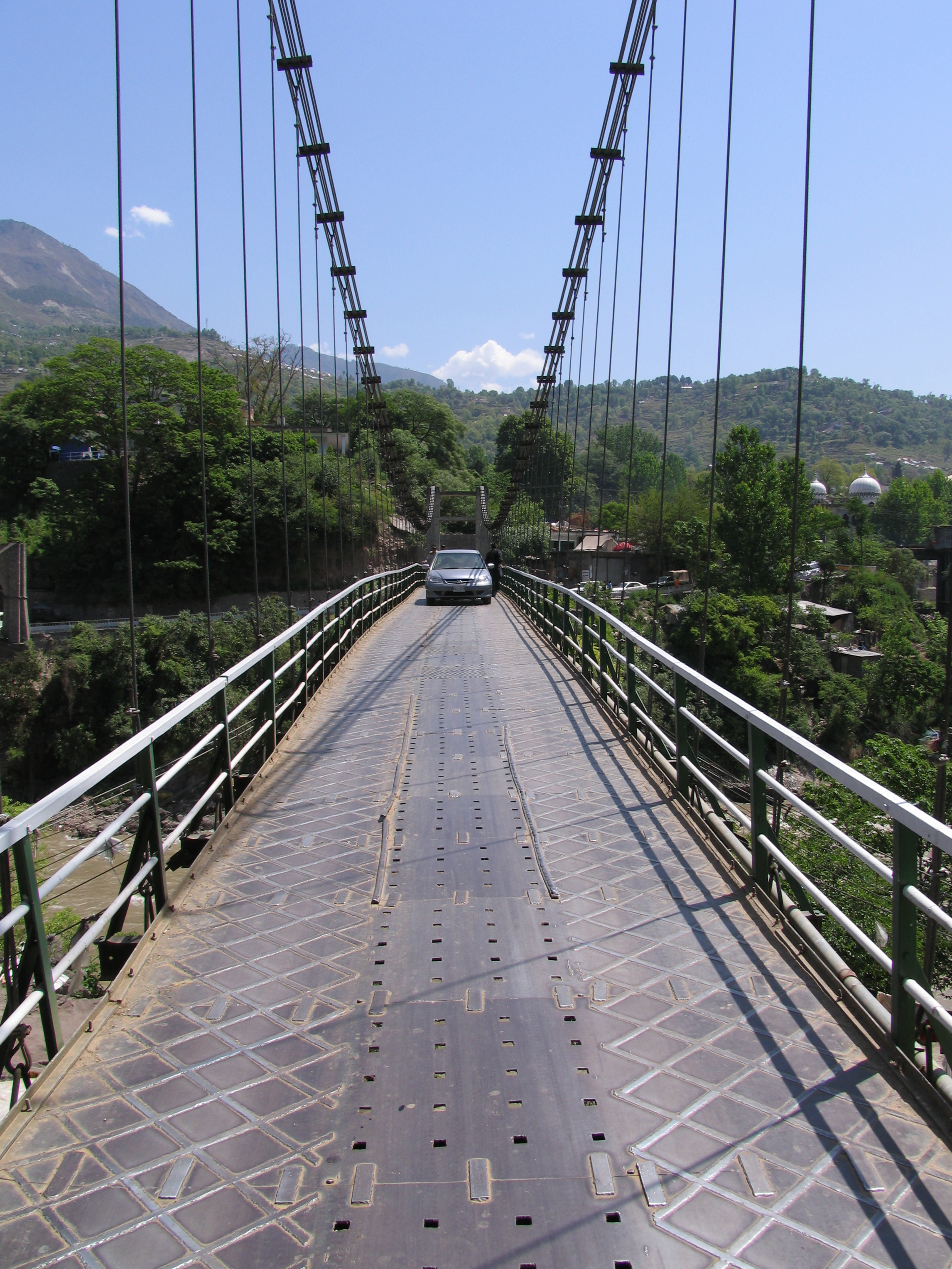
For a long time there has been a lot of discussion in literacy and writing education,  at both the K-12 and college levels, about “using” popular culture as a “bridge” to the print literacy genres and forms more valued – and more certain to be assessed – in the classroom. Yet it’s clear, in this metaphor, that this is a one-way bridge. The novel, the poem, the essay, the argument-based article, the research paper, all continue to be the desired destination for students in this model. Sure, we can start with the mindless and fun pop culture stuff, but then we cross that glorious bridge to the golden fields of print texts and critical thinking.

Obviously, I’ve got some problems with this model. To begin with, I’m less-than-convinced that no critical thinking goes on in the composing and interpretation of popular culture texts (and let’s remember that, today, students may very well be composing or commenting on pop culture online as well as reading it). And I’m also not the first to point out that the medium does not determine the quality of a text. There are plenty of bad novels, great films, excellent television series, and so on. Yet, while those points are worth making again (since they still seem to have not reached a lot of people), my problem with the model today is its single direction. Why must we assume that the only learning worth happening in school takes place when the base influences encountered outside the classroom are turned into the gold of academic literacy and texts? Why not, instead, approach all of the literacy practices, in the classroom and out, as connected? Why not engage students in ways of thinking about audience, detail, style, emotion, analysis, or anything else we want to teach them about reading and writing, as important ideas to consider regardless of the text and the context? Rather than approach popular culture as something to be left on one side of the bridge as students move on to more “important” work, why not help them see how the literacy and rhetorical practices we are teaching them will bring them knowledge and pleasure in all the part of their lives?

I know this is a difficult case to make, as the Core Common standards are not only generally hostile to this concept, but even more try to separate reading and writing into distinct, rather than connected, activities (more on that soon). I do take some heart in what Leslie Burns pointed out at IRA in terms of the language in the Common Core Standards that leaves some room for teaching about multimodal and digital and popular culture literacy practices. But even with that, it’s going to be an argument.

What would it take to convince literacy and writing educators and scholars to imagine a two-way bridge?

Enjoying the fast water

On the one hand, trying to sort through where the changes of digital media have left the study of literacy and rhetoric can seem daunting. The change is often so fast, occasionally so transitory, and in such volume (whether I mean the quantity of information or the level of conversation, I’m not certain) that I often feel as if I am standing hip-deep in fast water while juggling.  It seems all I can do to keep my balance, stay in one place, and keep aloft the balls I currently have in the air. As I noted when I started this blog, the press of time, work, and living a daily life as best I can, sometimes makes that balancing act all I can accomplish without diving deeper into the waters of technological and textual change.

Yet, at the same time, when I don’t focus on the speed of the water, and I take the time to get a better sense of my surroundings, I am less unsettled by what is happening around me. Of course, digital media are changing some fundamental opportunities for communicating, and those changes are, in turn, changing our conceptions of text, audience, authorship and more. Still, when it comes down to it, I don’t know that I see our essential jobs as literacy and rhetoric and writing teachers and researchers as changing. We’re still about the creation and interpretation of texts. Though it may be crass to quote myself, I’m keep coming back to the definition of literacy that I have written before:

For me literacy is connected to the way humans communicate ideas, concepts, and emotions to one another.  Humans are meaning-making creatures and we have learned to do so by creating representations of our ideas that can be interpreted by others when we are not present. I see it as important, then, to keep literacy connected to the communication of ideas through representation, whether of words, images, graphics, and so on. In this way literacy can apply to writing print on a page, arranging images and words on a webpage, or arranging images and words on film or video. Each example illustrates the arrangement of signs or symbols or images to represent ideas. For this book, my working definition of literacy, at its most basic and yet most varied, is the ability to use sign systems to compose and interpret texts that communicate ideas from one person to another.

Having this definition of literacy seems no big deal to me. Perhaps it comes from a background, academically and professional, that was not in English departments until I came back to graduate school. Or perhaps I can trace this position to having always been a movie freak and a photographer. Or maybe it is that I worked extensively with photography and audio and graphics in concert with writing during my education and (brief) professional life as a journalist. Whatever the reason, this seems to me not only to be the way literacy should be defined, now and in the past, but to point me toward what I think the purpose of literacy education (including rhetoric and writing) should be for us today. But more on that in days to come (I’m trying to learn to write shorter again, for the blog).

More to come….